 HackerTube.runGood videos, with context.
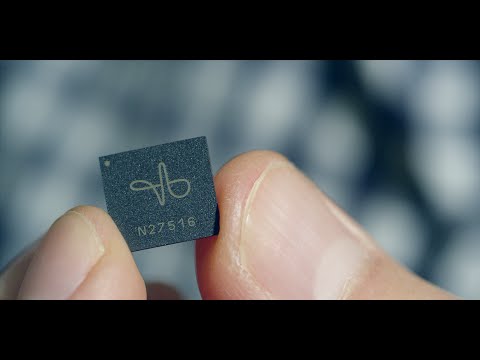
Welcome to Project Soli
About this video
Google ATAP's 2015 introduction to Project Soli, a radar-based sensor on a chip that tracks sub-millimeter hand motions for gesture interaction in small devices.
Why it appears in the archive
Referenced for years as the go-to example of fine gesture input, often in discussions of keyboard replacements and later its appearance in the Pixel 4.
AI-generated summary and labels from the source dataset; verify important details against the video. Source & credits.
From the Hacker News discussion
Google finally ships a research project in a real product and people don’t seem to understand the usefulness. Human nature for some reason often devolves to “what’s the point?” Here’s the 2015 announcement. There’s a lot of potential. Maybe we’d all benefit from “imagine what’s now possible “ [VIDEO]
Read original comment ↗Better pen input would be great, especially for drawing. How about some form of chorded keyboard or glove? A chorded keyboard was demonstrated in 1968 by Engelbart: [LINK] Google's Soli project might lead to better input: [VIDEO]
Read original comment ↗How long before gestures move off the screen surface? This technology got off to an exciting start but it quickly hit a wall. It was disappointing, for example, when Microsoft had to unbundle the Kinect. Microsoft's Kinect - 2010 Leap Motion - 2010 Intel Real Sense - [LINK] Google's Soli chip - 2016 - [VIDEO] Google's Touch Sensitive Fabric: [LINK]
Read original comment ↗This tool is for people who can't use their hands, of course. For the average person, we're pretty close to being able to use voice instead of typing. [LINK] [LINK] Throw in eye tracking and precise gestures ( [VIDEO] ) and the keyboard isn't necessary.
Read original comment ↗It would be great if some of the repetitive tasks didn't even require a keyboard but rather use subtle gestures, eye tracking, and voice commands. Leap Motion, for example, never panned out but Google's Soli project might get us there: [VIDEO] Throw in better autocompletion ( [LINK] ) and software development becomes more precise and less repetitive.
Read original comment ↗No one said that the solution has to be all speech. Throw in some small gestures and that'll be faster than reaching for a key. [VIDEO] Throw in eye-tracking and you can pick out any word quickly.
Read original comment ↗Gesture based computing is almost here in some form. Apple, Google, Intel and Microsoft are all working on it: Apple: [LINK] Intel Real Sense - [LINK] Google's Soli chip - [VIDEO] Microsoft shipped the Kinect 6 years ago. The need for hand tracking with VR headsets should give it another boost. By the 20th anniversary of Minority Report? [LINK]
Read original comment ↗"The keyboard is the only thing I need, except for the glasses." I think this loses a lot of appeal until we can throw away the keyboard. We should be able to do better. Hopefully, Google ships this silicon this year: [VIDEO] I'd rather have those monitors and no keyboard.
Read original comment ↗