 HackerTube.runGood videos, with context.
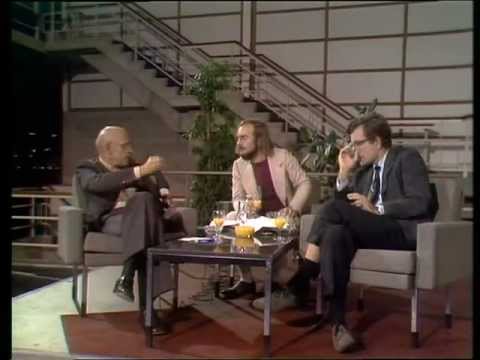
Debate Noam Chomsky & Michel Foucault - On human nature [Subtitled]
About this video
The full 1971 Dutch television debate between Noam Chomsky and Michel Foucault on human nature, with subtitles. They discuss creativity, knowledge, power and politics.
Why it appears in the archive
HN recommends it as a famous, revealing clash between two thinkers, though some note they largely talk past each other.
AI-generated summary and labels from the source dataset; verify important details against the video. Source & credits.
From the Hacker News discussion
For anyone who hasn't watched the actual, full video of the debate, you should do so. Watching them argue in two languages at the same time is super fun. [VIDEO] Okay, here's what the video is saying, in slightly-longer form. The exchange in the video is basically Chomsky saying "human nature" and Foucault laughing. This gets at the heart of the hour-long debate: do humans have some sort of nature? Foucault, and philosophers like him, think that the idea of 'human nature' is complete and utter garbage. So when Chomsky admits that his position boils down to an appeal of human nature, Foucault just laughs at him. It's a great moment that really highlights the whole thing. I love it.
Read original comment ↗1. Languages are used for much, much more than communication, and there is good reason to think that capacity didn't evolve for communication, but rather for metacognitive problem solving. 2. The idea that Tolkein --one of the most reknowned writers in our entire canon-- did something isn't relevant to the philosophical discussion of creativity and its obvious bounds. Even Tolkein was just painting within the lines set by the linguists he had read and the obscure languages he adored, not to mention the fundamental limits set by our capacity for language in the first place. For anyone who's curious about this kind of thing, I cannot reccomend the infamous debate b/w Chomsky & Foucault enough; it ranges across topics a bit, but chapter markers should help you skip to the core of it (creativity) if you prefer. Video here: [VIDEO] , some old summaries on /r/AskPhilosophy here: [LINK]
Read original comment ↗It is quite illuminating to see the exchange for instance between Michel Foucault and Noam Chomsky to get a sense of the difference of tone and focus between european and american intellectuals. [VIDEO]
Read original comment ↗really wierd, most of my exposure to foucault is indirect. this debate with chomsky on human nature is interesting [VIDEO]
Read original comment ↗I think he is not interested in epistemology. But I always find discussions on the origins or human knowledge just as fascinating as you. Thanks for sharing your thoughts. It sounds like you may have already been exposed to it given the content of your arguments, but there is a very enjoyable debate/discussion between Foucault and Chomsky on the acquisitions of human knowledge and human nature [1] and your position sounds quite similar to the one Chomsky elaborates on. [1] [VIDEO]
Read original comment ↗For anyone who hasn't seen it yet, here's an interesting debate between Foucault and Chomsky: [1] Unfortunately, they're mostly speaking past each other, but it's still worth watching. [1] - [VIDEO]
Read original comment ↗>How are they defining human nature in the context of their debate? That's what Foucault wants to know. [VIDEO] And from my little understanding, because they don't believe there's such thing as a human nature, since society, and other things from our surrounding affect us, and the "nature" could change in a different context, which would imply it isn't some kind of force behind us.
Read original comment ↗No one will deny that there are charlatans and poets posing as philosophers in the continental tradition. Tatterdemalion's post even prefaces with that. There are also straight up falsifiers and a endemic of p-value smudgers in the hard sciences. A good rebuttal to this Chomsky quote are the lovely debates he had with Foucault himself. [VIDEO] There is a plethora of writings of substance in the continental tradition. Writings that we should not ignore. 'Discipline and Punish' is one of them. I recommend 'The Dialectic of Enlightenment' by Adorno as your complement to Popper's writings. On another note, I don't generally see the value in antagonisms between paradigms or presentation forms. I find value from the analytical perspective and from critical theory, and being able to dance both dances is illuminating. I don't think the empirical process can reveal the entirety of the human experience. Steadfastly stumping for one paradigm over the other is no more useful than being a vim/emacs zealot. If Deleuze or Foucault don't grok for you, it doesn't mean the authors are _wrong_ or lying to readers to obtain mystic status. Just like someone not caring to study Zermelo-Fraenkel set theory shouldn't write off the entirety of mathematics.
Read original comment ↗