 HackerTube.runGood videos, with context.
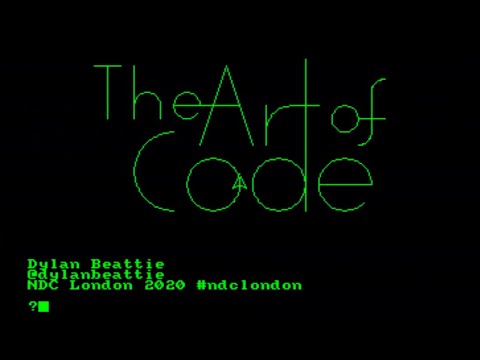
The Art of Code - Dylan Beattie
About this video
Dylan Beattie's NDC London talk on code written for art, fun and curiosity rather than utility. It includes quines, live music programming with Sonic Pi, and a memorable closing.
Why it appears in the archive
HN regularly names it among the best programming talks ever, praising the storytelling, the demos and the ending.
AI-generated summary and labels from the source dataset; verify important details against the video. Source & credits.
From the Hacker News discussion
I watched this video recently: [VIDEO] - and it's one of the best programming related ones I've seen in recent times. Really well presented as well - and he talks about various Quines - I won't spoil it for anyone.
Read original comment ↗For me, it was Art of Code by Dylan Beattie, but mostly because that talk has the best ending[0] I have seen. Also, introduced to me a side of programming that I instinctively knew existed but never sought out. [0]: [VIDEO]
Read original comment ↗One of my favourite talks has a demonstration of FizzBuzz in Sonic Pi. It still blows me away [VIDEO] - whole talk is worth a watch [VIDEO] - timestamp
Read original comment ↗This quine is discussed (among other topics) in The Art of Code[0], one of the most captivating tech talks I've ever seen. [0] [VIDEO]
Read original comment ↗Any talk by Dylan Beattie[1,2] or David Beasley[3,4]. I think they are quite unique in their presentation, they tell a story. [1] [VIDEO] [2] [LINK] [3] [LINK] [4] [LINK]
Read original comment ↗I also really enjoy Dylan Beattie's work. For those with some spare time, who might like to see a true "rockstar" programmer, you may like "The Art of Code"[0]. [0] [VIDEO]
Read original comment ↗In this video (where among the other things they explain huroboro), they show an example of code that prints out exactly the same output (itself) whether it's compiled/executed in c, python or ruby [VIDEO]
Read original comment ↗Thank you for detailed response. > to summarize where we are at this point I think it's a fair summary, yes. I hope you understand by now my views on the words "sustains" and "caused": (possibly) passive, not active. > Whereas your position is that concepts are meaningless, or somehow like 'images' perhaps, or cardboard cut-outs, and perhaps only exist in human minds Ah no. I'll try to clarify. So what is our overall goal? We exist. We sense a universe. And we're trying to explain where we and this universe came from. By logic, there has to be some First Cause. But we don't know the properties of this First Cause directly. We can only observe the effects and try to surmise what First Cause can consistently explain all the effects we see. Makes sense? Now given our observations, there are multiple hypothesis that fit our observations. Personal God. Impersonal physical laws. Brain in a vat. Simulation in a matrix. Etc etc. I got pulled into this (fun) conversation because the book claimed that it can logically show that the First Cause has to be a personal God. And my attempt has been to show that the questions raised in the book can be explained by impersonal physical laws as well. I'm not saying that the First Cause is definitely impersonal . I'm only claiming that given our current observation as of today , impersonal physical laws can explain all of our observations and we don't need the personal God hypothesis to explain anything (logically). Only by including observations
Read original comment ↗