 HackerTube.runGood videos, with context.
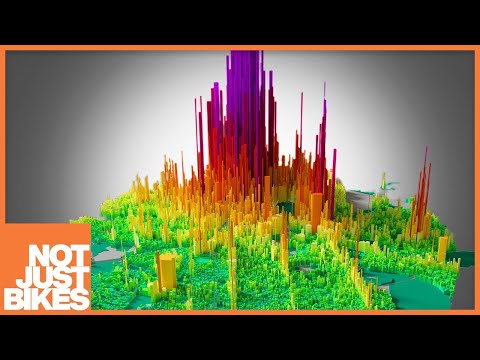
Suburbia is Subsidized: Here's the Math [ST07]
About this video
Not Just Bikes explains, using Urban3's property-tax analysis, why car-dependent suburbs generate less tax revenue than they cost to maintain, so dense urban cores effectively subsidize them. It is part of a Strong Towns series.
Why it appears in the archive
The go-to link in urban planning threads for the claim that suburban infrastructure costs more per resident than it pays back.
AI-generated summary and labels from the source dataset; verify important details against the video. Source & credits.
From the Hacker News discussion
Because "Office Vacancy Rate in San Francisco Just Hit a New High", That means property owners aren't making money. Workers aren't out spending to come in, stay and leave. All that is taxable, which is why government officials want people back in the office. In every city, the downtown core's tax revenue subsidizes the suburban sprawl all around it. Good overview of the research on this: [VIDEO]
Read original comment ↗If we taxed suburbs by how much they actually drain city budgets, no one would want to live in suburbs. It is by now a well-studied fact that suburbs are effectively subsidized by metropolitan cores. Makers and takers, indeed... Here's a video about some of the studies done to come to this conclusion: [VIDEO] The folks at Strong Towns also talk a lot about productive land use measured as property tax income per square foot. They say it is the gold standard way to make sure your budget remains solvent and you can provide the services people need to make your city thrive. Obviously this means building up.
Read original comment ↗Curious, have you considered the in-between here? Consider medium-density European cities, which still have massively higher density suburbs, but rarely the density -- combined employment and population densities -- of the urban core of most American cities. I hated living in Seattle, but I'm now an American finding I enjoy living in London. I walk around trees and birds every day, because I have good park access, and I can walk to them without having to worry about car traffic. For what it's worth, by the way, you almost certainly AREN'T willing to pay for the infrastructure that supports you: Suburbs are almost overwhelmingly economically supported by cities. I hate NotJustBikes (his self-righteous attitude is just awful), but he does have a great video on this: [VIDEO]
Read original comment ↗No, suburbs cost more per capita than people living in the inner city, generate less tax revenue and end up becoming a net negative to municipalities: [VIDEO] The whole series of videos from Strong Towns are good, you should take a look: [LINK]
Read original comment ↗Well, you're parking it in other places as well, I assume, unless you're only making pleasure rides with no stops at all. I am speaking more generally than just about your particular situation, which I obviously don't know. But in case you live in an American suburb: their entire financial setup is unsound, which arguably means even your own ground is subsidized. I find the arguments of Strong Towns and Not Just Bikes quite compelling: [VIDEO] .
Read original comment ↗>I sure do understand it, but I also understand that when it comes to comparing the environmental impact of upper middle class urbanites and suburbanites, we're splitting hairs Yea that is not at all true. You can literally compare the CO2 per capita for an average American/Canadian and someone from Europe and in general they produce 1/3 of the CO2. It is not a negligible difference. This is largely caused because of the urban designs which don't focus on gas dependent suburbia. Or the benefits from efficiency at scale which can only be achieved in high density living accommodations. [LINK] It is also a plain fact that downtown urban blocks are the profit generators for cities whilst suburbia is largely a financial hole. [VIDEO] You looking at a classist angle is I think an internal bias. There are poor/rich in both areas. It's just a straight fact though that suburban design is not sustainable both economically and ecologically.
Read original comment ↗> I'm not sure how we can hope to stop that inertia short of being limited by cheap energy or running out of actual land. Having the residents of the suburbs paying for their true cost seems like a great way to start: [VIDEO] As the video points out, would people be willing to start paying $9000 in property taxes instead of $1800 to stop operating the city at a loss every year?
Read original comment ↗To add a reference: Suburbia is Subsidized: Here's the Math -> [VIDEO] Essentially urban sprawl/suburbia/single family homes cost more for the city (road upkeep, water/gas pipes, etc.) than what they contribute in taxes, so many cities are in a positive feedback loop of building more houses to get quick money to do maintenance on the previous rounds of growth.
Read original comment ↗