 HackerTube.runGood videos, with context.
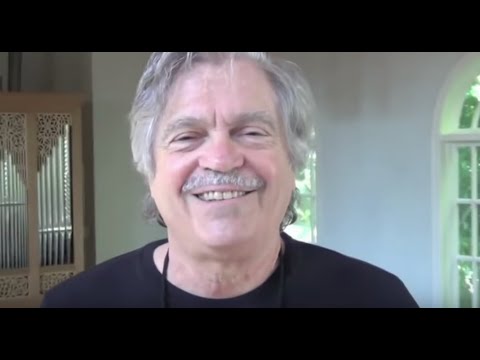
Alan Kay's tribute to Ted Nelson at "Intertwingled" Festival
About this video
Alan Kay's tribute to Ted Nelson at the Intertwingled festival, presented using a revived Smalltalk-78 system running on emulated 1970s Xerox PARC hardware. It shows live, user-programmable software from that era.
Why it appears in the archive
HN returns to it again and again as a demonstration of how programmable and composable 1970s systems were compared with today's.
AI-generated summary and labels from the source dataset; verify important details against the video. Source & credits.
From the Hacker News discussion
OP here. Definitely some improvements... but (at least in my eyes) incremental. Notebooks are pretty sweet, but in the hands of very few. They're definitely growing in popularity, which is great. But even the "notebook" concept is a very limited "low pass filter" version of the visions of Engelbart, AKay, TN, etc. The video that AKay has been sharing around in the post than @dang linked to[0] is a great example of what's not-even-close to possible on today's systems. [0] [VIDEO]
Read original comment ↗The Alto did things that even modern computers don't do as well. There's a demo I like to point at for this: [VIDEO] Look how programmable this is by the user! Today's OSes and their division of software into "applications" erect barriers to software composition that don't need to be there.
Read original comment ↗People often ask me "Is this a Dynabook, is that a Dynabook?". Only about 5% of the idea was in packaging (and there were 2 other different packages contemplated in 1968 besides the tablet idea -- the HMD idea from Ivan, and the ubiquitous idea from Nicholas). Almost all the thought I did was based on what had already been done in the ARPA community -- rendered as "services" -- and resculpted for the world of the child. It was all quite straightforwardly about what Steve later called "Wheels for the Mind". If people are interested to see part of what we had in mind, a few of us including Dan Ingalls a few years ago revived a version of the Xerox Parc software from 1978 that Xerox had thrown away (it was rescued from a trash heap). This system was the vintage that Steve Jobs saw the next year when he visited in 1979. I used this system to make a presentation for a Ted Nelson tribute. It should start at 2:15. See what you think about what happens around 9:05. [VIDEO] Next year will be the 50 anniversary of this idea, and many things have happened since then, so it would be crazy to hark back to a set of ideas that were in the context of being able to be built over 10 years, and would be ridiculous if we didn't have in 30 (that would be 1998, almost 20 years ago). The large idea of ARPA/PARC was that desirable futures for humanity will require many difficult things to be learned beyond reading and writing and a few sums. If "equal rights" is to mean something over the entire pla
Read original comment ↗#Softwarish - I'm biased a bit more towards interface development: greg wilson - What We Actually Know About Software Development, and Why We Believe It’s True - [LINK] steve wittens - making webgl dance - the title is deceptive, it's in some ways a visual crash course in linear algebra - [LINK] glenn vanderburg - software engineering doesn't work - [LINK] chris granger - in search of tomorrow - [LINK] alan kay - tribute to ted nelson at intertwingled fest - [VIDEO] bret victor - this is already mentioned but if I had to pick one it'd be 'the humane representation of thought' - [LINK] #Hardwarish: saul griffith - soft, not solid: beyond traditional hardware engineering - [LINK] deb chachra - Architectural Biology and Biological Architectures - [LINK] #Getting more meta in technology and history: James Burke - Connections
Read original comment ↗To get another taste of the kinds of systems possible in the 70s, in spite of the constraints, see Kay's demo of a revived Smalltalk-78 system: [VIDEO] (I believe this system is about 10-20K LOC software in total) Notes about the the revival are here: [LINK]
Read original comment ↗It's out of the context of this thread, but we were quite sure that "simulation-style" systems design would be a much more powerful and comprehensive way to create most things on a computer, and most especially for personal computers. At Parc, I think we were able to make our point. Around 2014 or so we brought back to life the NoteTaker Smalltalk from 1978, and I used it to make my visual material for a tribute to Ted Nelson. See what you think. [VIDEO] This system --including everything -- "OS", SDK, Media, GUI, Tools, and the content -- is about 10,000 lines of Smalltalk-78 code sitting on top of about 6K bytes of machine code (the latter was emulated to get the whole system going). I think what happened is that the early styles of programming, especially "data structures, procedures, imperative munging, etc." were clung to, in part because this was what was taught, and the more design-intensive but also more compact styles developed at Parc seemed very foreign. So when C++, Java, etc. came along the old styles were retained, and classes were relegated to creating abstract data types with getters and setters that could be munged from the outside. Note that this is also "simulation style programming" but simulating data structures is a very weak approach to design for power and scaling. I think the idea that all entities could be protected processes (and protected in both directions) that could be used as communicating modules for building systems got both missed and reject
Read original comment ↗> Thanks for sharing, I love these types of stories. Really makes me pine for the "old" days, and wonder if there's a parallel universe where technology took a very different route such that languages like APL, Lisp, and Smalltalk are used instead of JavaScript, Java, and C#, and what that world looks like. Easy, here is some time travel, "Alan Kay's tribute to Ted Nelson at "Intertwingled" Festival" [VIDEO] "Eric Bier Demonstrates Cedar" [LINK] "Yesterday's Computer of Tomorrow: The Xerox Alto │Smalltalk-76 Demo" [LINK] However to be fair, Java, C# and Swift alongside their IDEs are the closest in mainstream languages to that experience, unless you get to use Allegro, LispWorks or Pharo.
Read original comment ↗Well, something like the smalltalk-78 that Alan Kay demos here ( [VIDEO] ) would be an ideal starting interface for e-ink based tablet.
Read original comment ↗