 HackerTube.runGood videos, with context.
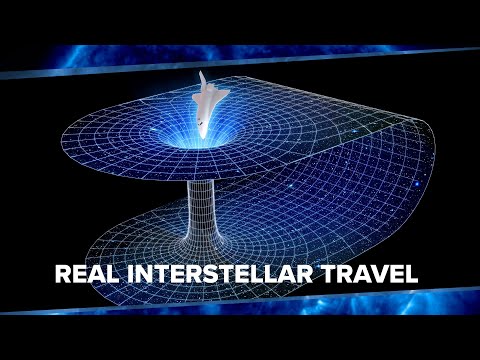
5 REAL Possibilities for Interstellar Travel
About this video
PBS Space Time surveys five realistic options for interstellar travel, from conventional rocket fuel to antimatter and nuclear pulse propulsion. The options rely only on known physics.
Why it appears in the archive
HN commenters link it in propulsion and space threads as an episode on interstellar travel that needs no unknown physics.
AI-generated summary and labels from the source dataset; verify important details against the video. Source & credits.
From the Hacker News discussion
Why not have an actual black hole on the ship and use the Hawking radiation to gain energy? More [here]( [VIDEO] ).
Read original comment ↗right i assumed low-relativistic speeds. also i got the number of bombs wrong, it's 300.000 not 200. Here's the relevant pbs video [VIDEO]
Read original comment ↗Launching from a mountain is a possibility ( I think China does it) Realistically, but not plausibly unless its an emergency, Thermonuclear bombs: [VIDEO]
Read original comment ↗There's an episode of PBS Space Time about this, "The Speed of Light is NOT About Light" [1], which comes pretty close to making the same points you are making. It might be useful to watch this earlier episode, "Are Space and Time an Illusion?" [2], first. There is a later episode (or maybe a couple of them) that go into how interactions with the Higgs field make it so things with mass travel slowed than the speed of causality. To tie back to the warp drive news, they have an episode that would be a good place to start on warp drives, "Is The Alcubierre Warp Drive Possible?" [3]. There's also "Superluminal Time Travel + Time Warp Challenge Answer" [4], and "Will Wormholes Allow Fast Interstellar Travel?" [5]. A non-warp unknown physics drive that comes up a lot also got an episode, "The EM Drive: Fact or Fantasy?" [6]. There is at least one episode covering interstellar travel without using any unknown physics, "5 REAL Possibilities for Interstellar Travel" [7]. The scope of the series is basically anything vaguely connected to astronomy, cosmology, and quantum mechanics, and the episodes are all pretty short (5-12 minutes), so it is a great thing to watch when you've got a short wait for something. Here's the series home page [8], and their YouTube channel [9]. Also on the PBS streaming app, for those who like to get their physics on their big screen TVs. [1] [LINK] [2] [LINK] [3] [LINK] [4] [LINK] [5] [LINK] [6] [LINK] [7] [VIDEO] [8] [LINK] [9] [LINK]
Read original comment ↗