 HackerTube.runGood videos, with context.
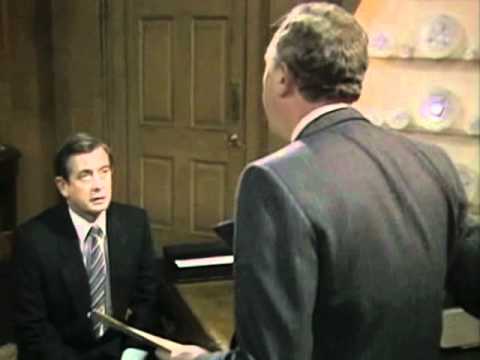
Leading Questions - Yes Prime Minister
About this video
A clip from Yes Prime Minister in which Sir Humphrey shows how leading questions can make a survey support or oppose national service. It is a short satirical scene.
Why it appears in the archive
HN commenters bring it up whenever a poll or survey result looks suspect, as the classic illustration of biased question framing.
AI-generated summary and labels from the source dataset; verify important details against the video. Source & credits.
From the Hacker News discussion
> the questions can shape the response. An excellent illustration of this: [VIDEO] Although in this case, it doesn't look like they had bad intentions and they seem to have dug at least a little below the surface and drawn what seem like sensible conclusions. I wonder if more detailed results and the full list of questions are available somewhere.
Read original comment ↗Link for the curious: [VIDEO] Starts at about 1:00. One of my favorite shows Edit: updated link, thanks @dvngnt_
Read original comment ↗This is probably a good time to recall that polling in politics can be highly misleading . I recall an excellent segment on Yes, Minister that explains it [0, 1]. We really need to know the other questions they were being asked at the time to see if they were primed in some way. A near majority being uncomfortable with white people would be outrageous, but Americans are usually pretty tolerant so it is likely that Rasmussen is playing games here. [0] [VIDEO] [1] [LINK] - For people who like text, search for "Have another opinion poll done"
Read original comment ↗Polls may or may not be carried out in a neutral way. A good many are deliberately biased, even more have known flaws that are glossed over. A humorous take on this I love (from the 80s BBC comedy Yes Minister, which is often scarily realistic): [VIDEO]
Read original comment ↗This is different from the classic phenomenon explored in Yes, Prime Minister [1]. It's not that they manipulated the questions in advance -- it's that they reversed the meaning of the questions after the respondent had answered them . Even under these conditions, the majority of respondents were then prepared to support the position which they had, ostensibly, only a few minutes ago opposed and vice versa . Remarkable. [1] [VIDEO]
Read original comment ↗"voters say 45 - 40 percent the government's anti-terrorism efforts go too far restricting civil liberties, a reversal from a January 10, 2010, ... when voters said 63 - 25 percent that such activities didn't go far enough to adequately protect the country." The fact that the statement has reversed ("not far enough" -> "too far") rather than the numbers (ie. it's not "63 - 25" -> "40 -> 45") brings to mind this scene from Yes Minister [VIDEO]
Read original comment ↗The issue with psychology is that double blind experiments are prone to observer effect. The behaviour often have nothing to do with reality - when measured, everything tends towards the ideal. And the experiments can often result in the results you want if the double blinds are removed. I always fall back onto the Survey from "Yes Minister" to explain how that works [VIDEO]
Read original comment ↗Taking that humorous example further, you could go down both questions, still have a have a final "Yes" to both questions, but then have a final question to ask which one of the two a particular voter is worried about. e.g. [VIDEO] has a comment with the transscript of the skit HUMPHREY: No. So she starts asking you some questions. Mr Woolley, are you worried about the number of young people without jobs? BERNARD: Yes. HUMPHREY: Are you worried about the rise in crime among teenagers? BERNARD: Yes. HUMPHREY: Do you think there's a lack of discipline in our comprehensive schools?] BERNARD: Yes. HUMPHREY: Do you think young people welcome some authority and leadership in their lives? BERNARD: Yes. HUMPHREY: Do you think they respond to a challenge? BERNARD: Yes. HUMPHREY: Would you be in favour of reintroducing national service? BERNARD: ...Oh. Well, I suppose I might be. HUMPHREY: Yes or no? BERNARD: Yes. ... HUMPHREY: Mr Woolley, are you worried about the danger of war? BERNARD: Yes. HUMPHREY: Are you worried about the growth of armaments? BERNARD: Yes. HUMPHREY: Do you think there's a danger in giving young people guns and teaching them how to kill? BERNARD: Yes. HUMPHREY: Do you think it's wrong to force people to take up arms against their will? BERNARD: Yes. HUMPHREY: Would you oppose the reintroduction of national service? BERNARD: Yes. ... FINAL QUESTION: Are you more worried about the rise in crime among teenagers or about the growth of armaments? POTENTIAL FINAL ANSWE
Read original comment ↗