 HackerTube.runGood videos, with context.
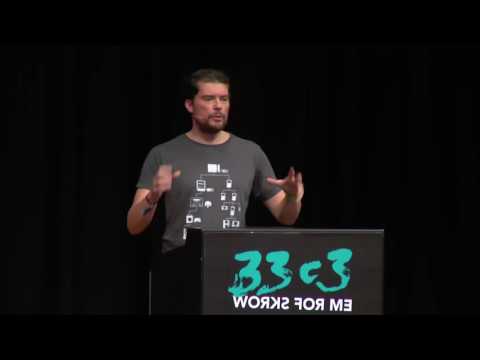
The Ultimate Game Boy Talk (33c3)
About this video
Michael Steil's 33c3 talk explains essentially everything about the Game Boy: CPU, video hardware, peripherals, and the tricks used by games and demos. It revives the era of counting clock cycles around hardware limits.
Why it appears in the archive
HN treats it as the standard starting point for Game Boy emulator writers and homebrew developers, with several calling it one of their favorite talks.
AI-generated summary and labels from the source dataset; verify important details against the video. Source & credits.
From the Hacker News discussion
The Ultimate Game Boy Talk[0] (listed in the page) is one of my favorite talks of all time. If you were to send this talk to someone, with basically just the videe they could likely build a faithful Gameboy clone. It's so dense, easy to understand, and comprehensive. I'll listen to it form time to time and think about all the cool tricks it reveals. Super impressive to have that much knowledge for a system that only had a couple thousand programs ever written for it. [0]: [VIDEO]
Read original comment ↗I really like the Gameboy hardware; it's limited, but the design feels very elegant in it's simplicity. I've written a couple of toy Gameboy emulators at this point. It's a bit challenging to get anything working, and honestly I have no idea how to approach audio at all. Nevertheless, it's still quite fun. The LCD timings are a point of curiosity for me. It seems there's still a slight bit of mystery around it, still today. I was inspired to play with emulating Gameboy specifically after an excellent 33c3 talk, The Ultimate Game Boy Talk, which I highly recommend. [VIDEO] (Some day I would like to approach emulation for more platforms, both newer and older, but I feel I still have so much time learn about designing emulators that I haven't bothered with that yet. It's so open ended, and handling things like cycle counting has a lot of different approaches of varying desirability.)
Read original comment ↗Michael’s blog is one of my favorites. His “Ultimate Guide” talks are great and I rewatch them at least once a year. Ultimate Guide to the C64: [LINK] Ultimate Guide to the Game Boy: [VIDEO] Ultimate Guide to the Apollo Guidance Computer: [LINK]
Read original comment ↗the Gameboy, not the SNES, but this talk is very very good at going in detail about a bunch of internals. The graphics stuff is 29 minutes in but I love the whole video. Very much a high level guide to building a "retro-y" fantasy console for people into that stuff [VIDEO]
Read original comment ↗Game Boy emulators are always great for educational or experimental projects, because the Game Boy platform is surprisingly simple, which leads to a very quick payoff, and yet very "real" in that the Game Boy was a great commercial success with thousands of software titles available, so you have plenty of software available to try in your project and actually make use of that payoff. One example to illustrate how simple the Game Boy is: There is no operating system at all, only a 256 byte boot ROM whose sole purpose is to display the Nintendo logo from the cartridge and halt if it does not checksum correctly (for both cartridge integrity and legal reasons). This entertaining 33c3 talk manages to describe the Game Boy hardware practically in its entirety (and with some previously unknown details, actually): [VIDEO]
Read original comment ↗I've been working on a GB emulator for awhile. Step one is to understand the architecture of the system. What are the different hardware components? How do they interact? A simple emulator boils down to: While(true) Emulate_one_cpu_cycle() For each cycle you have to produce any side effects from the various peripherals (serial comms, update the display, generate audio, etc.), process any external changes (button presses, serial data), and emulate the next CPU instruction (basically a big switch). I recommend "The Ultimate Gameboy Talk (33c3)" [0], for an overview of the Gameboy and it's internal peripherals. There are various test ROMs available that you can use to verify the basic functionality. [1][2] 0. [VIDEO] 1. [LINK] 2. [LINK]
Read original comment ↗For anyone interest, I recommend watching "The Ultimate Game Boy Talk" [0] from 33c3, lots of interesting details about how a Game Boy works, including the PPU [0]: [VIDEO]
Read original comment ↗Anyone interested in how the Game Boy works should watch "The Ultimate Game Boy Talk" by Michael Steil. [VIDEO]
Read original comment ↗