 HackerTube.runGood videos, with context.
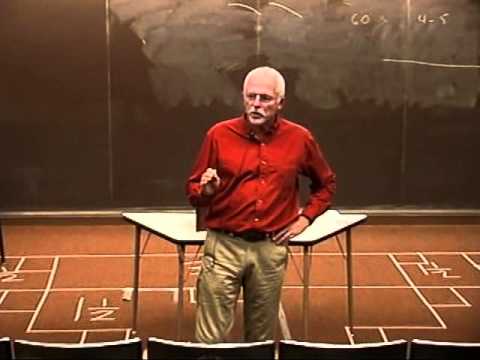
Marty Lobdell - Study Less Study Smart
About this video
Psychology professor Marty Lobdell gives a one-hour lecture on how to study effectively, covering short focused sessions with breaks, study environment, note-taking and memory techniques. It was aimed at students who cram without improving.
Why it appears in the archive
HN recommends it for productivity, focus and working-from-home threads, since its advice on breaks and mental modes applies beyond studying.
AI-generated summary and labels from the source dataset; verify important details against the video. Source & credits.
From the Hacker News discussion
I'm more curious if he was actually studying. A lot of people claim they can study for these absurd amounts of time when the vast majority of it is actually spent staring at a page or even rereading the same page. Marty Lobdell did a fantastic talk a while back [1] that changed the way I used to study and I'd recommend it to anyone who feels like they aren't studying efficiently. [1] [VIDEO]
Read original comment ↗1.) Write things down. Get organized. Google Calendar and Trello mean I never forget to do anything and I don't exercise brain power on remembering it all. This helps balance by being more relaxed. At night I don't worry about all the things I have to do tomorrow, which makes a lot of people sleep less. I say, "It's on my list, which I will tackle tomorrow." I sleep like a baby. I get things done. 2.) If you're looking for balance, take care of your body. 1 hour workout is 4% of your day. Make time for it, and do something active that you enjoy. (Even if that's playing DDR for an hour). Cook healthy meals in bulk ahead of time. Sick and dead isn't productive. 3.) Take breaks. When you feel your mind wandering, and you can't remember anything you've read in the past 5 minutes it's time to take a short break. Take 5 minutes, walk around the building, then sit back down. You might think you'll be so much more productive continuing to sit there working, but if you're working in circles or even making things worse, you are not being productive. Study Less, Study Smart is a talk by Marty Lobdell that eloquently discusses this. [VIDEO] 4.) Focus. Remove distractions. Close all the windows you don't need to work. Close your office door, answer your emails only once an hour. Whatever you need to do to focus.
Read original comment ↗There was a lecture by Marty Lobdell[1] where he talks about a note taking system that separates facts and concepts that I really like. Concepts are easy to get a handle on because it doesn't take much effort to think of a real word example to relate it to. Facts on the other hand are very difficult because they aren't easily related to knowledge you already have so for facts you use a mnemonic device. [1] [VIDEO]
Read original comment ↗As a person who has trouble focusing-- A.) Minimize visual stimuli in your work area. Get everything off your desk, and shove your face in a corner. (I've turned my desk to face away from the hallway.) B.) Take notes as you work. I will write 15 minutes of code, take a note on what I'm doing, then get (purposefully) distracted for a minute or two. When I come back to my work, I can look at my note to see what I was doing and pick back up where I left off. It really minimizes the impact of distraction on my work. You can start out with lower chunks of "productive" time if you want. Practicing focus helps you to build up amount of time you can focus. Relevant talk on Youtube: [VIDEO]
Read original comment ↗Any time you have to work hard for a long period of time, the trick is to take scheduled breaks. You don't need a long break either, just like 5 minutes every 30 minutes throughout the day will keep your energy up a lot. I'll come home, eat dinner while watching something fun, then get back using that pattern. Marty Lobdell has a good talk about this on Youtube: [VIDEO] I think for me the other thing is -- don't make it bigger than it is, like don't psych yourself out. Yes, it's hard to work from morning to night, but it's just hard, not impossible. And I think being physically good--eating right, sleep enough, and exercising, yes it's tired advice but that's how you get "energy".
Read original comment ↗Managing distractions, clearing, and changing your environment are particularly effective for me. I was reminded of the following study skills lecture, some of which is applicable when trying to get going and keep going in a work context. Marty Lobdell - Study Less Study Smart ~60 min. Study environment commentary from 10:15 [VIDEO]
Read original comment ↗Hacking the mind, how to get your brain into the right mode Marty Lobdell - Study Less Study Smart [VIDEO] AJ Jacobs: The Importance of Self-Delusion in the Creative Process” [LINK] -- On Machine Learning biases Aylin Caliskan - A Story of Discrimination and Unfairness [LINK] -- On scaling test automation, why scaling does not deliver the value you want GTAC2016: Scale vs Value - Test Automation at the BBC [LINK] -- On Future of Machine Learning Joscha Bach - Machine Dreams (33c3) [LINK] Joscha Bach - Computational Meta-Psychology (32c3) [LINK] Joscha Bach - From Computation to Consciousness (31c3) [LINK] [Edit] Layout
Read original comment ↗I watched an interesting lecture by martin lobdell - study less study smart [0] which says that your mind tends to be in a specific mental mode depending on the location. So when you try to work on your kitchen table, your mind is in the eating mode and you constantly think of that sandwich. Hence, separate as much as possible, separate room/table/laptop... [0] [VIDEO]
Read original comment ↗