 HackerTube.runGood videos, with context.
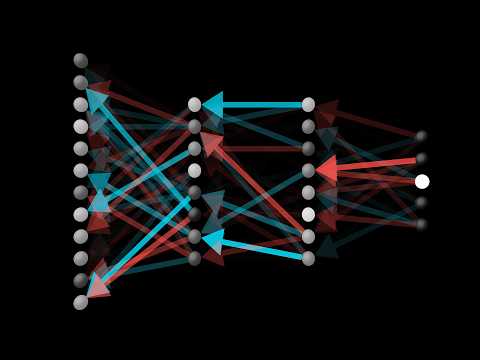
Backpropagation, intuitively | Deep Learning Chapter 3
About this video
3Blue1Brown's third deep learning chapter gives a visual, intuitive account of backpropagation and what happens to a neural network as it learns. A follow-up video covers the underlying calculus.
Why it appears in the archive
Recommended as the most accessible introduction to backprop for people who struggle with the pure math.
AI-generated summary and labels from the source dataset; verify important details against the video. Source & credits.
From the Hacker News discussion
I'm in the same boat. For long time, I was interested in AI but at the same time intimidated by math. I'm relatively comfortable with discrete mathematics and classical algorithms and at the same time calculus and linear algebra is completely foreign to me. Also, I do not accept way to learn ML without good understanding of core principles behind it. So math is a must. A few months ago, I stumbled upon very amazing YouTube Channel 3Blue1Brown which explains math in very accessible way and at the same time I got feeling that I finally started understanding core ideas behind linear algebra and calculus. Just recently he published 4 videos about deep neural networks: [LINK] [LINK] [VIDEO] [LINK] So my fear of ML was gone away and I'm very excited to explore whole new world for neural networks and other things like support vector machines etc
Read original comment ↗While we're at this, I found the explainations by 3Brown1Blue to be very intuitive when it comes to neural networks, especially for folks who're new and don't necessarily grasp concepts when explained primarily through math. What is backpropagation really doing? [VIDEO] His other videos on this topic are just as good.
Read original comment ↗This was very timely for me and for anyone else learning, here are the first few videos of the series: [LINK] [LINK] [VIDEO] (Original video) [LINK]
Read original comment ↗This has a lot of words, but not enough content. I recommend 3Blue1Brown's neural net videos instead: [VIDEO]
Read original comment ↗It's not satire. If you have some function with several inputs, the Jacobian is a matrix of all the partial derivatives of this function with respect to each input variable[1]. Since derivatives give the slope of a function, if you think about your function as being like a bumpy surface with the height at each point being the output, this matrix tells you which way (and how far) to change any input if you want to go "up" or "down" in the output. Backpropogation is a way to optimise a neural network. You want to know how best to nudge the weights of the network to optimise some loss function, so what you do is compute the gradient (ie partial derivative) of that function with respect to each of the weights. This allows you to then tweak the weights of the function so your network gets better at whatever task you're trying to get it to learn. See [2] to understand how this works and and [3] to understand how this relates to the Jacobian, but generally if you're trying to go "downhill" in your loss function it's easy to see intuitively that knowing which way the function slopes (ie the effect of tweaking each of the weights) is important and that's what the Jacobian tells you. The inverse of a matrix[4] and its transpose[5] are two different operations in linear algebra. Transpose turns rows into columns and columns into rows and the inverse of a matrix is a little harder to grasp maybe without background, but you could think of multiplying one matrix by the inverse of another a
Read original comment ↗