 HackerTube.runGood videos, with context.
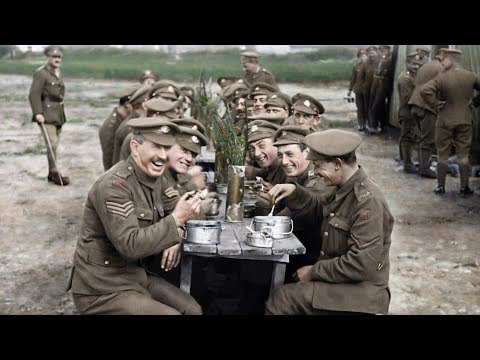
They Shall Not Grow Old – New Trailer – Now Playing In Theaters
About this video
The trailer for Peter Jackson's They Shall Not Grow Old, a WWI documentary built from restored, colorized archival footage and BBC interviews with British soldiers.
Why it appears in the archive
HN points to it as a way to see WWI footage restored so the war feels modern and real.
AI-generated summary and labels from the source dataset; verify important details against the video. Source & credits.
From the Hacker News discussion
For anyone that hasn't seen They Shall Not Grow Old, I highly recommend it. Peter Jackson (of Lord of the Rings fame) spent years working with the British government to digitize and colorize their old footage of World War I. They also added in sound using the actual military equipment that was used in the field during the war. They also hired lip readers to figure out what each person was saying and added in dialogue. It's really incredible and makes the war (which was only 100 years ago) feel much more modern than old black and white footage. Trailer: [VIDEO]
Read original comment ↗A bit off topic, but I recommend that anyone interested in this watch They Shall Not Grow Old ( [VIDEO] ) - it's an excellent documentary, a bit of a passion project by Peter Jackson to polish up a lot of old WW1 footage (normalized the frame rate, since it was hand cranked, colorize, and add sound - he hired lip readers and voice actors from the same regions as the filmed soldiers). It makes it seem much more relatable and real, in a way that comically-fast black and white footage really doesn't.
Read original comment ↗If this interests you then you might like to check out “They Shall Not Grow Old”[0] - a Peter Jackson movie which is based off AI/ML restored[1] WW1 footage with color, sound, and dialog added to silent B&W original stock. [0]: [LINK] [1]: [VIDEO]
Read original comment ↗Trailer for anyone who has not seen the film and is curious (like me): [VIDEO] I find it odd that this article/interview is about something very visual and has no images in it so I wanted to see what it looks like.
Read original comment ↗> 200 years ago everyone had perfectly straight teeth Wait what? Citation needed please, I googled this and couldn't find anything. Our teeth were definitely bad 100 years ago, since we have images and video from that far back. The bad teeth are something that really struck me in "They Shall Not Grow Old": [VIDEO] Edit: Okay I see a Scientific American article about this here: [LINK] so that means in 100 years we went from perfect teeth to terrible? Dang
Read original comment ↗thats a good and interesting distinction. So the golden standard (althought I am somewhat biased) for film scanning is this: [LINK] ( [LINK] ) The Northlight film scanner. The reason why its good is because its not a realtime scanner (like a spirit) so it has the time to do "perfect" registration. This means that you should be able to re-scan the same thing twice, and any VFX/added in stuff will still line up. It has the light source well away from the film, so it doesn't heat it up. It also does an Infra red pass to allow for dust busting. (that is the removal of blemishes from the film) This scanner is the one you'd use for restorations/rescans and "digital remastering". With that in mind, its capable of scanning at 8k (which is then down res'd to 4k from memory). If you are doing a straight film-to-digital with no remastering (which are pretty rare) then thats what you'd do. Now, to answer your question! For restoration, there might be a bit of degraining and re-painting & reconstruction, followed by a regrain. This is because film grain is really hard to rotoscope/paint over. Because the edges all move, and its a general pain. So for some limited restorations there will be some "fake" grain. But only as much as needed to make it look like the rest of the film. Think of it as like a conserved oil painting, a light cleaning, some post processing to bring out the colours/contrast, bam off to digital. for "re-mastering" there might be some upscaling. Now, its my understanding
Read original comment ↗