 HackerTube.runGood videos, with context.
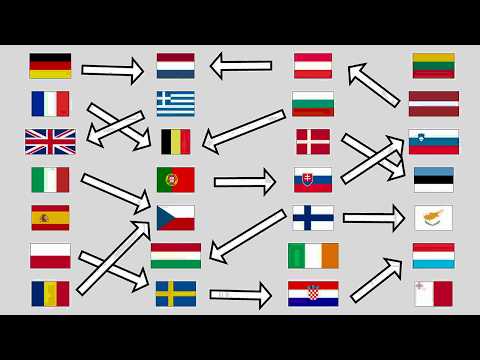
Europe Is Actually Five Different Groups of Countries
About this video
A short CGP Grey explainer on the overlapping and inconsistent membership arrangements of European countries across the EU, Schengen, the euro and the EEA. It shows why "the EU" is full of exceptions.
Why it appears in the archive
Cited as a fast, entertaining explanation of EU membership tiers when EU politics comes up.
AI-generated summary and labels from the source dataset; verify important details against the video. Source & credits.
From the Hacker News discussion
Also, in contrast to their website, their Youtube channel only contains educational videos and no promotional material. They also have a German channel [1], which unfortunately is not up to date with the English one, though. If you like this kind of dense educational videos I can recommend C.G.P. Grey's [2], Crashcourse's [3] and Henry Reich's [4] channels. I'm fascinated by this new avenue of educational material as it can provide the best parts of both books and tv if done well: You can pause and play back any parts you have difficulties to understand or want to think through more thoroughly and you have the benefit of both visual and auditive information channels in parallel. For example of the latter, take a look at this video [5] - describing the same concept (expansion of the universe does not have a center) in book would have been much more awkward. Also, the pure speed of the videos makes them more entertaining than any TV show could, because TV has to aim for the lowest common recognition speed at every time. E.g. [6] would never be possible on a streaming media. [1] [LINK] [2] [LINK] [3] [LINK] [4] [LINK] and [LINK] [5] [LINK] [6] [VIDEO]
Read original comment ↗Can you provide some examples? As far as I know there are many countries that cooperate with the EU but are not a part of it, based on many levels of compromise. (This video proposes we replace the european flag's stars with asterisks for all the exceptions and compromises! [VIDEO] ) In fact the UK took several of those types/levels of cooperation into consideration and rejected each. (Here's a quick video overview of that [LINK] )
Read original comment ↗Thanks for taking the time to think about it. > Democracy itself always gives rights to the majority against the will of the minority. this is true and it has a name I believe; the "Tyranny of the Majority", I think. > The tyranny of the majority (or tyranny of the masses) is an inherent weakness to majority rule in which the majority of an electorate pursues exclusively its own objectives at the expense of those of the minority factions. Unfortunately, as you mentioned, being _more democratic_ ultimately lends itself to being this way. However one neat trick the EU has (and I promise I'm not trying to spin this as pro-EU, as it's only in one place): is that the direct votes are split proportionally. This means that lesser represented groups get a voice in the EU parliament. For the UK with their "First past the post" system, and winner take all government; where a party like UKIP can get 12.6% of all votes and win 0 representation in parliament.... well, lets say it's a stark contrast. explained very nicely; here: [LINK] The EU voting system (the way in which we elect MEPs to parliament) is detailed in this video by the BBC: [LINK] ; as you'll see it's much more representative. I know of other videos that speak pragmatically about the EU, its problems and if it's worth it (though with a slight pro-EU stance): [LINK] I also found this video that asks the question if the EU is democratic, which I think makes good points and you can draw different conclusions from it: [LINK] I
Read original comment ↗