 HackerTube.runGood videos, with context.
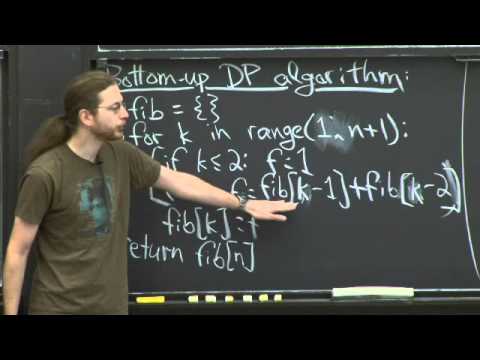
Lecture 19: Dynamic Programming I: Fibonacci, Shortest Paths
About this video
Erik Demaine's MIT 6.006 lecture introducing dynamic programming through Fibonacci numbers and shortest paths. It covers memoization, subproblems and optimal substructure.
Why it appears in the archive
Recommended as a clear introduction to dynamic programming from a well-regarded instructor.
AI-generated summary and labels from the source dataset; verify important details against the video. Source & credits.
From the Hacker News discussion
When you deal with large data sets (e.g. Hadoop/Spark...), BigO starts to hit badly. Dynamic Programming also requires you to have a clue about it. See [VIDEO] for some cool explanations.
Read original comment ↗You may also like a couple of lectures by Erik Demaine: Dynamic Programming I: Fibonacci, Shortest Paths [VIDEO] Dynamic Programming II: Text Justification, Blackjack [LINK]
Read original comment ↗I don't think I've ever been asked a DP problem in an interview, and only had to use it while programming once . That said, I liked the MIT lecture on it: [VIDEO]
Read original comment ↗> on interviews they want you to explicitly construct the array very often i.e. it's the different between hire and a strong hire exactly because @lru_cache is much easier are you serious? someone really asked you to "use array". Beyond stupid if they really did. > you can easily blow the stack for real production grade implementations using recursion recursive solution doesn't automatically mean using a the method stack. you can implement recursive solutions using explicit stack . > dynamic programming proper please. There is no "proper" dynamic programming. Please watch this MIT intro [VIDEO] .
Read original comment ↗