 HackerTube.runGood videos, with context.
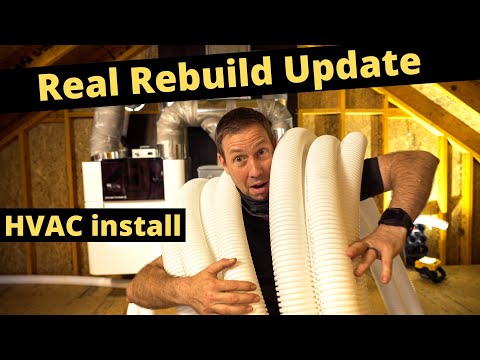
Passive House - Fresh Air System Install & Costs (Zehnder)
About this video
Matt Risinger covers installing a Zehnder ERV fresh-air system in a tight passive house, explaining balanced ventilation, the benefits of heat recovery and the costs involved.
Why it appears in the archive
Pointed to in HVAC and indoor-air threads as a hands-on look at high-end ventilation and ERV installation.
AI-generated summary and labels from the source dataset; verify important details against the video. Source & credits.
From the Hacker News discussion
Matt Risinger explains how and why he put an ERV in his house in this episode of The Build Show [VIDEO] . It seems to be the thing to do of late in to help with air exchanges and still meet the passive house standards.
Read original comment ↗> Radiant floor heating and radiant cooling zones are also in. And run water through Your floors to heat or cool zones. It is one of the most efficient ways to heat a structure and feels good as well. I think/thought radiant cooling is still pretty "experimental". I think in certain climates it can cause the pipes to "sweat" a lot. If you want to see some ultra high-end stuff, you can check out this YouTube channel: [VIDEO] Here's their video on radiant cooling ( [LINK] ). Not sure how to word this - but my understanding is that the stuff on his channel is pretty cutting-edge. Most builders use older/time tested materials and methods. You may get weird looks if you start asking your contractor about the things you see in his videos. Also, everything is very climate specific. Mini-splits won't work if you're building a home in a very cold climate, etc. If you have the money, there are HVAC engineers that will do a way better job than a local installer. If you don't, I'd just check reviews and go with a HVAC contractor with a good reputation.
Read original comment ↗* Do try to get an HRV/ERV if you live in places where the outside air temperature gets >30C or <10C. Otherwise bring in fresh air will cause issues. * Make sure your system can handle MERV16 filters: they catch more things, but may create more back pressure, so the system has to be designed to handle it. Further nice-to-have upgrades would be HEPA capabilities, and (if you live in wildfire zones) charcoal filters (for smoke/fire smells). You don't have to (always) use the finer filters, but having that option is useful. * The filter should ideally be 4"/10cm, as they have more surface area, so reduce back pressure and often only have to be swapped every 6 months (sometimes even every 12). They do cost a bit more because of the extra material, but you get convenience. Don't go less that 2"/5cm though. * The mentioned Zehnder is a good brand, but AFAICT, are higher end systems, and so may be a bit more pricey: [VIDEO] [LINK] * Consider getting a separate whole house dehumidifier, depending on your climate: sometimes the indoor air temperature may be comfortable (20-25C), but if the relative humidity (RH) gets too hight (>60%) it will feel hot. But the AC won't run because its thermometer will say everything is fine. Temperature and moisture needs to be dealt with via separate mechanical systems.
Read original comment ↗Ah yes, it seems that the built-in stuff has restrictions, but there are external boxes that can be added: * [LINK] Which allow MERV 16 and even carbon filters: * [LINK] * [VIDEO]
Read original comment ↗