 HackerTube.runGood videos, with context.
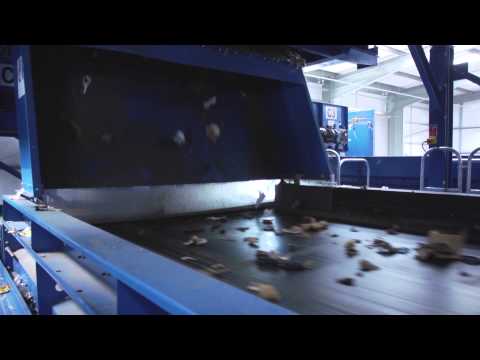
What happens at a Materials Recycling Facility? (MRF) - How does our sorting machine work?
About this video
A short tour of a UK materials recycling facility showing how mixed recyclables are mechanically and optically sorted. Aluminum, ferrous metal, glass, paper, and trash come out as separate streams.
Why it appears in the archive
HN links it as a concrete example of the scale and speed of automated recycling sorting.
AI-generated summary and labels from the source dataset; verify important details against the video. Source & credits.
From the Hacker News discussion
I believe WEEE (Waste Electrical and Electronic Equipment) recycling plants use computer vision directly. Recycling plans having multiple optical units with compressed air to then redirect the route of identified items, but I don't know whether this is image recognition or Raman / IR to identify the material. Certainly to differentiate plastics, it will be Raman / IR. An info vid on a recycling plant, showing the sort of scale and speed of sorting:- [VIDEO]
Read original comment ↗AI can help us here. This is an example of automated trash sorting (optical sorting) from 4 years ago. I expect today we can sort trash even more efficienty: [VIDEO] Another idea would be an army of cleaning bots that can be let loose in a forest, on a beach or on roadside to methodically collect all trash. Even underwater drones could be used to clean up beaches. I think cleaning bots is the way forward.
Read original comment ↗Automated recycling is coming along well. Here's a typical modern plant in the UK.[1] Sorting is mechanized, with tumble drums, vibratory sorters, and magnets doing most of the work. Permanent magnets pull ferrous metal out. AC magnets pull aluminum out. Vision systems, often multispectral, look at the presorted materials as they go by on a fast belt and use air jets to kick out certain types of items. This is standard technology. There's still some manual picking involved in most plants. Robots are taking that over at a few plants.[2] Aluminum is the moneymaker. Plastic bottles can go to a plant that turns them back into pellets for making new bottles.[3] A huge plant now serves southern California. Not clear this makes money. Waste paper isn't that valuable. "Peak paper" was a while back, and US paper mills have been closing for years. It's not that sorting is hard, it's that the product is so low-value. [1] [VIDEO] [2] [LINK] [3] [LINK]
Read original comment ↗Separating the stuff after it gets dumped in a truck in one big mix?? ABSURD. Nope. Routine.[1] There are shakers, screens, magnets, blowers, crushers, and optical sorters. It's not that complicated. Mixed recycling goes in, and aluminum, ferrous metal, glass cullet sorted by color, paper, and trash come out. Separation is working fine. The problem is that the markets for waste paper, glass cullet, and plastic are weak, even when fully sorted. Waste paper, especially. Paper mills in North America have been closing for years. Plastic bottle recycling is coming along well. CarbonLite has a huge plant near LA, and plants in Denver and Pennsylvania. Recycled plastic bottles go in, and plastic pellets ready for injection molding into new bottles come out. This is the area where things are getting better. Glass cullet is in trouble. Fewer manufacturers are using glass containers and there's a cullet glut. All this is at best marginally profitable and tends to need subsidies. Aluminum is the only real moneymaker. [1] [VIDEO] [2] [LINK]
Read original comment ↗