 HackerTube.runGood videos, with context.
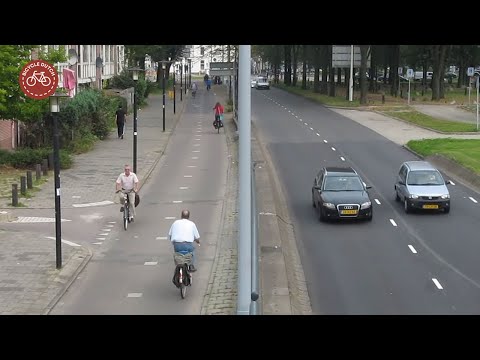
How the Dutch got their cycle paths
About this video
A short BicycleDutch video on how the Netherlands got its cycling infrastructure, including the 1970s protests and the shift away from car-centric planning. The channel later published an updated version.
Why it appears in the archive
HN uses it as the standard short answer to whether car-dominated cities can become bike-friendly, since the Dutch had to fight for it.
AI-generated summary and labels from the source dataset; verify important details against the video. Source & credits.
From the Hacker News discussion
The obsession with helmets in many countries is born of an idea that violence on the roads is inevitable. It's a bit like responding to knife or gun crime by saying everyone should wear kevlar vests, problem solved! Rather than insisting that knives and guns are not used in public spaces. Some people have real problems grasping this. Cars are seen as inherently dangerous, pedestrians and everyone else should (ideally) stay off the roads, and nobody should challenge our "right" to drive where and when we like. But driving is still a choice, albeit coerced since there are so few alternatives, and that choice has profound implications for others. Why should I wear protective clothing because you choose to drive a vehicle which puts me in danger? In the Netherlands, to respond to your point, they have largely eliminated motoring-related danger for cyclists. If anyone is interested in the development of Dutch cycling infrastructure, this is an excellent video: [VIDEO] (How the Dutch got their cycle paths, 6m 29s) David Hembrow has an informative blog about all things cycling in Holland: [LINK]
Read original comment ↗Those "antifragile" solutions have been used to great effect in Netherlands where they have built a massive cycling, walking, and transit infrastructure. They were able to build this infrastructure due to a popular protest movement, 'Stop de Kindermoord' (Stop the Child Murder) which was in reaction to exactly the problem we face in the US of deaths and injury caused by motorists. There is a great video about the protest movement and the transformation of dutch infrastructure here: [VIDEO]
Read original comment ↗In short, build bike lanes like the dutch. [1] Big, physically separated, omnipresent bike lines. Ensure that bikes are first class citizens on intersections. Compare the 2-stage turn with the dutch design [2] [1] [VIDEO] [2] [LINK]
Read original comment ↗Riding a bike does not have to be as dangerous as it is in most places in the United States. Here[1] is an interesting video on how the Dutch got their bicycle paths. From the intro: "The Netherlands has the world's largest number of cyclists, but it is also the safest place in the world to cycle. That is largely because of the perfect cycling infrastructure that can be found throughout the country. How did the Dutch get this network of high quality cycle paths?" [1] - [VIDEO]
Read original comment ↗Yes, definitely a big problem in the UK too. Although I think support for cycling is perhaps more cross-party than in the US, at least in the political elite. Both the Conservative PM and Mayor of London are nominally pro-bike, also The Times (centre-right paper for those from outside the UK) ran a major campaign on cycle safety, after one of their journalists was killed: [LINK] Although certainly their freedom to do something serious about the issue is restricted by the anti-metropolitan, anti-liberal vroom vroom demographic. > If cycling is to ever become safe, cities need to start embracing the bike like they do in the Netherlands, but it's no easy task. On that topic, this mini-documentary is worthwhile looking at: [VIDEO]
Read original comment ↗A couple of months ago I watched a short video about how we got our cycling lanes. I think it provides some interesting context on why we built our cycling infrastructure. If you like this topic, you'll like the video... [VIDEO]
Read original comment ↗I highly recommend researching the Dutch street design. By explicitly avoiding freeways and encouraging biking, they save so much time (no traffic) and money (think long term health benefits of cycling, no pollution, cheaper infrastructure, lower reliance on fossil fuels, fewer accidents, more visits to local businesses) it's insane the rest of the world isn't copying them ASAP. [VIDEO] [LINK]
Read original comment ↗I highly recommend researching the Dutch street design. By explicitly avoiding freeways and encouraging biking, they save so much time (no traffic) and money (think long term health benefits, cheaper infrastructure, lower reliance on fossil fuels, fewer accidents, more visits to local businesses) it's insane the rest of the world isn't copying them ASAP. [VIDEO] [LINK]
Read original comment ↗