 HackerTube.runGood videos, with context.
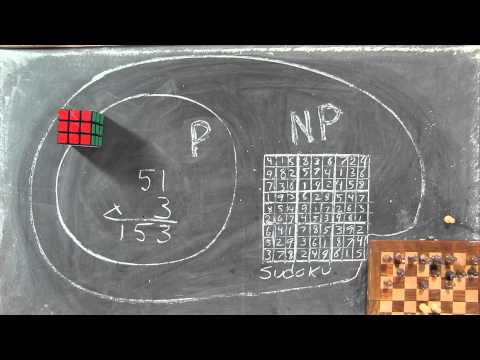
P vs. NP and the Computational Complexity Zoo
About this video
An 11-minute animated introduction to P vs. NP and the wider landscape of complexity classes, inspired by the Complexity Zoo wiki. It assumes no background in computer science.
Why it appears in the archive
HN repeatedly recommends it as the best short, funny introduction to P vs. NP and complexity classes for people with no background.
AI-generated summary and labels from the source dataset; verify important details against the video. Source & credits.
From the Hacker News discussion
There's a fantastic video I refer to every now and then if I'm a bit unsure about it, definitely recommend it - [VIDEO]
Read original comment ↗My absolute favorite overview of this - the video goes over both the explanation of the spaces, but also how it relates to a sort of understanding of reality itself! [VIDEO]
Read original comment ↗This 10 minute video is a great introduction to the P = NP problem and computational complexity theory if you have no context. I've shown this to plenty of friends (including those outside of computer science). Essentially, "does being able to quickly recognize correct answers mean there's also a quick way to find them?" [VIDEO]
Read original comment ↗A guy at a company I used to work for made a great video on this. Very understandable even without any background on the topic: [VIDEO]
Read original comment ↗> I would guess the P!=NP proof would be an example. Unfortunately, it doesn't have any easy description that the average person would understand. "Hard. Really hard. Don't be ridiculous.". Now backtrack 2 small examples on paper. Oh, look, the number of steps here grow, but these grow even faster! Especially mathematics when explained to a layperson so much depends on the language used. If one manages to keep the rest of the complexity zoo[1] out of the explanation and invests time into very basic examples, a lot things can be explained that otherwise the average person would not understand. [1] [LINK] EDIT: Looking for a video I stumbled upon last week that had a very nice, short explanation of P vs NP (which I did not find again), I found this one: Not lay-person simple, but very funny and also provides a cursory glance at what lies beyond P vs NP, i.e. the complexity zoo: [VIDEO] (10 min)
Read original comment ↗Because Graph Three Colouring[0][1] is NP-Complete[2][3] we can use it to solve any NP problem. Integer factoring is an NP problem[4] so we should be able to factor integers by using Graph Three Colouring. This post shows one way of doing that, and explains the techniques used to show directly that Graph Three Colouring is NP-Complete. [0] [LINK] [1] [LINK] [2] [LINK] [3] [VIDEO] [4] [LINK]
Read original comment ↗I took a class from Gasarch in the 80's at UMD. He's a freaky smart guy! I swear to God (and have said before [1]): He wore a t-shirt that said: "P=NP? I don't know, and I don't care!" How times have changed! [1] HN discussion: [LINK] of Scott Aaronson's article "My 116-page survey article on P vs. NP: better late than never": [LINK] Also: P vs. NP and the Computational Complexity Zoo [VIDEO]
Read original comment ↗I have taken algorithms courses. This video explains in detail: [VIDEO] In short, P means Polynomial time (i.e. markets can solve computation problems efficiently) and NP means Non-Deterministic Polynomial time (i.e. markets can verify solutions of computation problems efficiently but solutions are found by luck). If P != NP, it means luck CANNOT be engineered and markets are competitive.
Read original comment ↗