 HackerTube.runGood videos, with context.
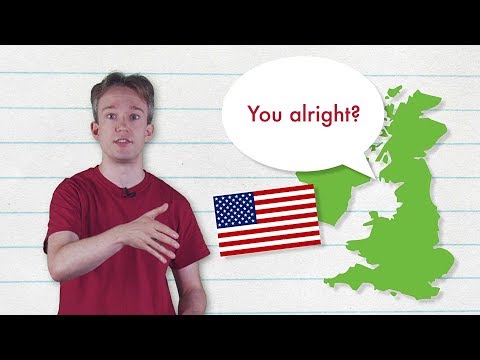
Why “No Problem” Can Seem Rude: Phatic Expressions
About this video
Tom Scott explains phatic expressions such as hello, thank you and how are you, which carry social meaning rather than information, and why replies like no problem can seem rude to some people.
Why it appears in the archive
HN uses it as the short, clear explainer when discussions about greetings and small talk come up.
AI-generated summary and labels from the source dataset; verify important details against the video. Source & credits.
From the Hacker News discussion
You're misunderstanding what the phrase "how are you" means in the US. It is not a literal question, but a set phrase with implicit social rules for "correct" responses. This doesn't mean the person asking is faking kindness - but also understand they're not actually asking for a rundown of how your life is going. Negative responses to the question are ok, just not deeply personal answers. Tom Scott has an excellent video that addresses this very issue. [VIDEO]
Read original comment ↗> “good, but I have a billing issue" I think this gets exactly to it, but I don’t agree with the rest of your comment. In both the provided examples, the fact that there's a request for actionable information is already implicitly understood based on the situation. When a doctor comes into your room, you already know they're checking on your condition. The "How are you?" is just general greeting (to which, in casual situations, the proper response is "Fine, and you?"). And this is the crux of the misunderstanding. The Russian takes it as a request for information when it isn't. *Edit*: A YouTube video pulled from another comment in this thread that explains what I was trying to say much better: [VIDEO]
Read original comment ↗How did you sleep is a great question to understand how someone is, it’s one of the first things I ask myself when I wake up. I then get a more quantitive answer from my Oura ring. That then helps me plan what is achievable that day. BUT, “how are you?” is almost always a Phatic Expression[0], especially in cases where it could be considered a generic greeting. Phatic Expressions seem to be more important to some cultures than others. For example, in Australia it’s such a fundamental greeting it often trips people up[2]. In this case the question is not a genuine or sincere inquiry into you current state, but rather a request to acknowledge the presence of each other. In that sense, “how did you sleep” would be such a curve ball unless among friends I think it would cause secondhand embarrassment. Tom Scott did a great 3 min video[1] on this exact thing. [0] [LINK] [1] [VIDEO] [2] [LINK]
Read original comment ↗This issue is easy to understand as long as you're familiar with the concept of the 'phatic expression'[0]. It is perfectly possible for these folks to say 'kill the Boer' without actually meaning it to be a call for genocide, instead meaning something along the lines of "fuck the Boer". On the other hand, it's easy to understand why folks who don't have a history of singing this song would hear the actual meaning, rather than the 'phatic' meaning, of the words. And given that the singers are on the record advocating for the seizure of Boer land, it seems kind of silly to just take their word for it when they claim that this line of the song has a 'phatic' meaning rather than a literal one. Regardless, it seems clear that the party use the term to instill and stoke racial hatred: > Nomalanga Mkhize, a historian at Nelson Mandela University, said of the chant: “Young people feel that it rouses them up when they sing it today. I don’t think that they intend it to mean any harm.” We don't actually want to kill you, but the kids sure do love singing about it! Also, is anyone else worried about the Times? Is their spin machine mis-calibrated? I know they're left-leaning, but carrying water for racist communists seems a bit much, even for them. [0] [VIDEO]
Read original comment ↗In linguistics these are called "phatic expressions", and are far from unique to American English. Similar to idioms, phatic expressions don't have the literal meaning implied by their component words and instead serve a social purpose (in this case, serving to signify the beginning of a communication protocol). In British English the analogous phrase would be "you alright?" [VIDEO]
Read original comment ↗