 HackerTube.runGood videos, with context.
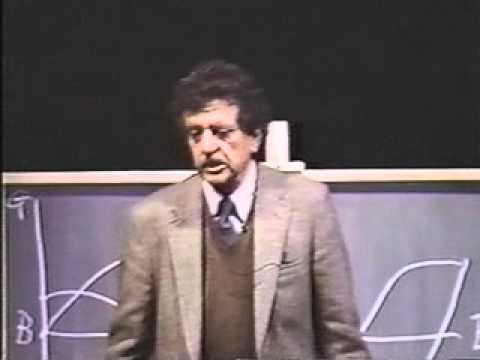
Kurt Vonnegut on the Shapes of Stories
About this video
A short lecture in which Kurt Vonnegut graphs the simple shapes of stories, such as Man in Hole and Boy Gets Girl. He sketches how fortune rises and falls over a narrative.
Why it appears in the archive
HN cites it as a charming, funny way to see story structure and a source for the idea that plots have shapes.
AI-generated summary and labels from the source dataset; verify important details against the video. Source & credits.
From the Hacker News discussion
Agreed. It's a shame to think about all the interesting things that might be getting built instead. Programming a novel generator is a great example. What a fantastic challenge being overlooked. It reminds me of this great video of Vonnegut graphing the emotional shape of stories. [VIDEO]
Read original comment ↗Vonnegut is really special. I always like coming back to his Shape of Stories talks: [VIDEO] Here's a longer one: [LINK] It's interesting to see the difference in him with age. He seems to giggle more as an older man.
Read original comment ↗It's not about logic vs. illogic. Logic is important to understand for a technical person- if they do not understand logic, their programs do not work, and their bugs cannot be fixed. But normal humans do not respond to logic. Normal humans respond to stories, and this is what tech people are really BAD at. You know who is good at telling stories? The entertainment industry, and politicians. What is a story? A linear sequence of cause and effect, with some kind of overall shape. see this Kurt Vonnegut video where he explains story shapes [VIDEO] If you can construct a compelling narrative- which is empathetic with the listener enough that you know they will be able to insert themselves into the story, and imagine that they are them main character, then you win- that one battle. If you try to program a person like they are a computer, by simply listing a series of what you feel are logical statements, you will come across as condescending, and self absorbed. You will fail. When you notice that they are not following you, and you interpret this as "Oh they must be missing a library. var TCPIP = import("internets").tcpip;" you just make the problem worse.
Read original comment ↗i read this and liked it, only after I scrolled up did I realize it was Kurt Vonnegut. Also, I really love this video of his, on the shape of a story [VIDEO] As a side note I found the formatting, or lack of formatting, interesting. It felt very much like a document, or a piece of paper, than a web page. That surprised me.
Read original comment ↗Vonnegut drawing graphs of famous story plots: [VIDEO] I saw him do this bit in person in the early 90s and never forgot it.
Read original comment ↗It actually sounds a lot like the old Vonnegut talk. [VIDEO] non video description [LINK] the talk is funny though, i saw him give a much longer version.
Read original comment ↗> It's odd to consider music written like this - where snippets of a piece are written in all sorts of conflicting tempos, and then finally assembled during "editing" into something cohesive (although I guess this is how the Norwegian megapop songwriters kind of do this). Sample-heavy (hip-hop, house) musical genres have been doing this for a while. They'll take old 90 BPM records, sample em, pitch em/speed em up, or cut samples in such a way that they fit into new time signatures, keys, tempos, etc. The really good producers will take a bunch of samples and mash em up into a new work. I think a lot of popular art forms have an internal tempo, whether their creators are conscious of structuring the tempo or not. All stories (music, movies, books, plays) have "shapes" [1] which incorporate a component of tempo. It would be interesting to make it explicit though for an art form where language rather than music is the main form of expression. Musicals are a happy medium here, a completely time-based dinner party or play might end up more like Jeopardy and less like free-flowing art. [1] [VIDEO]
Read original comment ↗That's what I meant by presentations of his shapes of stories. There are a couple of lectures posted on YouTube. [VIDEO] [LINK] The thinking originated in his (rejected) master's thesis at the University of Chicago. Here are some photos of some of the graphs: [LINK] Even there, in an incomplete copy, there are seven unique story shapes. And there's a major difference between saying here are some shapes of some stories and here are the only story shapes.
Read original comment ↗