 HackerTube.runGood videos, with context.
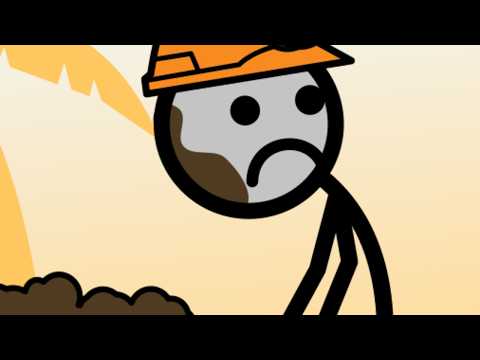
Try to Rule Fairly and You'll Be Overthrown
About this video
CGP Grey's animated adaptation of The Dictator's Handbook, explaining how rulers stay in power by keeping a small group of key supporters happy rather than ruling fairly. It lays out selectorate theory and how resources shape regimes.
Why it appears in the archive
HN treats it as the standard short summary of how power and political incentives work, applied to governments, companies and workplaces.
AI-generated summary and labels from the source dataset; verify important details against the video. Source & credits.
From the Hacker News discussion
Our government has no incentive to retain them. Their main source of money is not small / medium / innovative business taxation - it's oil and other natural resources. And you don't need higher education and talent to extract oil. Actually, you don't need any population at all. As I see it, their real incentive would be to shut down the higher education system, because it a) costs money, b) sends a good part of produced talent to other countries, and c) produces educated citizens which are harder to manipulate. Sadly, I hear quite a few confirmations of this from friends who work in education. BTW, here's a great video, Rules for Rulers, which is basically a video TL;DR of "The Dictator's Handbook" that explains incentives of democratic and autocratic rulers: [VIDEO]
Read original comment ↗Negative? It's how the world works. Those in resource-driven countries enjoy very little comfort, because you don't need very comfortable/educated people to extract resources. Our economies are more based on knowledge, so we get better lives. CGPGrey's rules for rulers is a very good outline of this and other related topics: [VIDEO]
Read original comment ↗I feel like this comment thread needs a link to CGP Grey's excellent Rules for Rulers video, too: [VIDEO]
Read original comment ↗An excellent primer on modes of Government, how they arise, and how this perpetuate is this CGP Grey video, Rules for Rulers : [VIDEO]
Read original comment ↗You are correct for the most part, but I think you are drawing the wrong implications. Yes, they are resistant to swings based on mood changes in the population. However, this does not hold for changes of mind or strategy by elected people themselves. They might promise something at some point and then not do it. US history is full of broken promises. A counterpoint is that Trump and Obama are elected directly and specially on foreign relations they have a huge power to do whatever they like. Obama promised some stuff, Trump retracted it. > In contrast, a dictatorship is unreliable, because all decisions are made by one person, whose mood swings can result in lots of unpredictability. That is true in theory but in practice many dictatorships are remarkably stable. A dictator has to please his cronies, he can't do whatever he likes. He can do what he likes as long as it does not touch the interest of the cronies. Check "Selectorate theory" in political science. Or this nice little video: [VIDEO]
Read original comment ↗I've read the book The Dictators Handbook (watch the CGP Grey video Rules for Rulers[1] for a good summary) and I can imagine a number of really clear and compelling Job Stories for this technology: * As a ruler facing large-scale protests, I want to clear the crowds of people from the streets without deploying soldiers who might choose to actually side with the protestors. * As a ruler who is afraid of a coup, I want to reduce the personnel-management costs of maintaining my military so that I can reduce the number of officers needed to maintain the same level of force lethality. This will let me purge my officer corps of possibly-disloyal members and lavish rewards on those who remain. * As a ruler from an ethnic/religious minority, I want to restrict membership in the military to that minority without reducing its lethality so that I can prevent members of the majority from having trained members who could seize power or resist marginalization. Technological advances like quinine and the Madsen and Maxim Gun allowed fewer than 1,000 Europeans[2] under Belgian King Leopold to spread the benefits[3] of civilization to The Congo, an area more than 3 times the size of Texas. I am excited to see the world that these new advances will usher in. [1] [VIDEO] [2] [LINK] [3] [LINK] (although yes, also [LINK] )
Read original comment ↗> It's not strictly a "wrong leaders" problem. It's much more systemic than that. Elect a good leader and the oil will provide the impetus to tear that leader down. See also, The Dictator's Handbook , summarized well by CGP Grey's video "The Rules for Rulers" ( [VIDEO] ). It's an unstable equilibrium to run a country on a wide power base, if it has centralized resource-extraction economy; as any dictator who just plans on staging a coup to take the oil and then reward their few revolutionaries with it, will be able to win over pretty much anyone from the previous wide-base government, who was previously getting a much-smaller slice of the pie.
Read original comment ↗You would probably enjoy CGP Grey's video Rules for Rulers, which covers very reasonable arguments for why politicians don't enact "good" legislation: [VIDEO]
Read original comment ↗