 HackerTube.runGood videos, with context.
Learn music theory in half an hour.
About this video
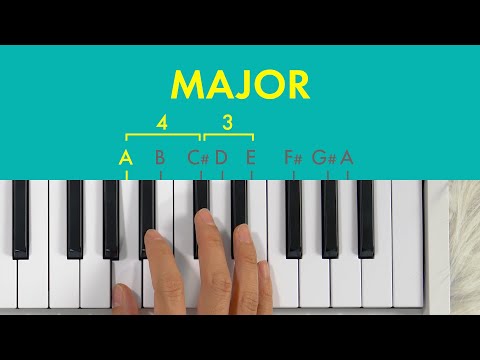
Andrew Huang teaches the basics of music theory in about half an hour, covering intervals, chords and patterns. He stresses understanding how music works over memorizing terminology.
Why it appears in the archive
HN recommends it as a concise, approachable starting point for anyone asking how to learn music theory.
AI-generated summary and labels from the source dataset; verify important details against the video. Source & credits.
From the Hacker News discussion
I found this video to be an extremely helpful and concise explanation of music theory basics: [VIDEO] "Learn music theory in half an hour" is obviously an exaggeration, but it really comes astoundingly close to fulfilling that promise. It contains a lot of information and each part builds on the previous parts, so it requires focus and maybe a few repetitions to 'get it', but I think the approach is fantastic for showing how many ideas of music theory are deeply connected. Not a book as you requested, but hopefully you'll find the other reply useful. As for some of your specific questions: Frequency is the same concept as radio frequency, but in this case refers to something we can directly sense. Radios transmit electromagnetic waves, which are photons moving at a certain rate, measured in Hertz, or cycles per second. Sound frequency refers to movement of air waves, so a more accurate analogy than radio waves is waves in a pond when a rock is thrown in. Human ears are sensitive to frequencies between 20 Hz and 20,000 Hz, so any sound you hear is a combination of frequencies. Natural language is helpful here, since higher frequencies sound 'higher' and lower frequencies sound 'lower'. A tone is a sound at a specific frequency, also known as a note. For example, 440 Hz is designated as the note A4 by the Geneva conventions, and this is what most instrument tunings are based off. Twelve tone equal temperament is the tuning system nearly all modern Western music uses. Certain ra
Read original comment ↗Probably right on the edge of what you would define as technology.... Music! I am 30 and have spent my whole life not learning any music or instruments because it is 'too hard'. But now I am getting into music theory and wow it is really interesting and awesome. Highly recommend. I found this video really helpful - [VIDEO] .
Read original comment ↗It really depends on your objectives. If you want to compose pop music (including rock and electronic music) the risk is to lose yourself in complicated harmony "rules" that are mostly irrelevant to the style you want to play (on top of my mind parallel fifths prohibited in classical theory but they are commonplace in rock/metal) and only useful to analyze classical pieces. Personally as a guitarist I kind of hacked my way into music theory to being able to improvise over and compose pop/rock/electronic by only using intervals and scale degrees. I can hear chords progressions, I know why a V I cadence works, can identify and play in modes (dorian, lydian...), but I can't name the notes so transcribing into a DAW is cumbersome but at least I can compose freely. Not ideal but considering the minimal time I invested it's a very good return for me. Concretely the idea is to focus only on patterns and formulas. The steps would be to learn to play and hear intervals, then construct chords, e.g. Major chord is 4+3 semi-tones, minor is 3+4, another +3 is minor 7 or +4 for major 7. Then by using a scale (e.g white notes on the piano for key of C major/A minor) it's easy to find the chord on each degree. After that learn a few common chords progressions and being able to identify them in everyday songs should come naturally. Finally practice composing melodies by targeting chord tones and you are ready to start composing. I found this video does a very good job at providing this overvi
Read original comment ↗This is fantastic. I didn't grow up learning music and found so much of it seeming arbitrary and incomprehensible. This really pairs well with a 30min video[0] I watched taking away so much mystery and showing 'patterns in the madness'. It would be good if there were some keybindings to play notes (e.g. digits for I, II, or letters for notes ignoring #/b, or "r t y u i o p ["). A toggle to label the notes that are part of the selected key could help a beginner like myself. [0] [VIDEO]
Read original comment ↗