 HackerTube.runGood videos, with context.
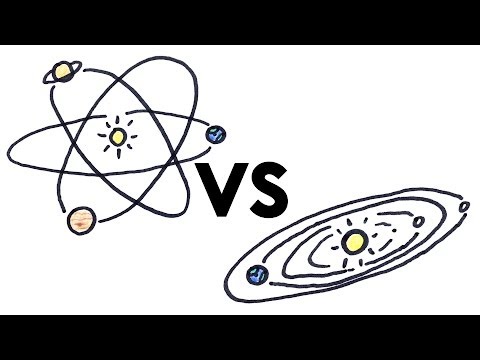
Why is the Solar System Flat?
About this video
A minutephysics explainer on why the planets orbit in a flat plane. It shows how conserved angular momentum flattens a collapsing cloud of matter into a disk.
Why it appears in the archive
HN commenters link it as a quick, intuitive explanation of angular momentum and why spinning clumps of matter flatten.
AI-generated summary and labels from the source dataset; verify important details against the video. Source & credits.
From the Hacker News discussion
It has to do with the total angular momentum of a system composed of multiple smaller bodies. (Like the dust/debris cloud during solar system formation) This minute physics video (about the shape of the solar system) explains it probably better than I can put into words myself: [VIDEO] The relevent part starts at about 1:03, but I recommend watching the whole thing.
Read original comment ↗I like this video from minutephysics to get an intuitive sense for it: [VIDEO] It addresses a different question (Why is the Solar System Flat?) but it touches on the question of why things spin when they clump together from gravity. An answer through the lens of my own understanding: it's just more difficult NOT to have angular momentum. If you have a lot of particles falling toward each other due to gravity, imagine how difficult it would be to set it up such that all of them fall straight into their collective center of mass. They'd have to be in a precise, orderly configuration (e.g. equally spaced apart on a unit sphere). Note that each particle affects each other particle -- if any one particle gets too close to another, their gravitational interaction will cause them to move toward each other, and add an angular component to their motion with respect to the center of mass. There are so much more disorderly configurations that will result in the particles moving with at least SOME angular momentum about their center of mass. Vector sum them all together, and it'd again be difficult for that sum -- the total angular momentum -- to be zero; they'd have to cancel each other out exactly, and there's just way more configurations where that isn't the case. That's why it's simply much more likely for anything made out of particles in space to be spinning than not. Additionally, as they fall toward the center of mass, the radius lowers, too, which means to conserve angular mome
Read original comment ↗Indeed. And to elaborate: the random collisions which flattened the solar system (or galaxy) over billions of years all conserved angular momentum. Minute Physics have a nice video on this: [VIDEO]
Read original comment ↗