 HackerTube.runGood videos, with context.
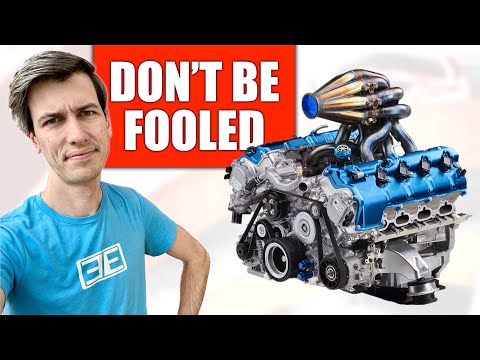
The Unfortunate Truth About Toyota's Hydrogen V8 Engine
About this video
Engineering Explained examines Toyota's hydrogen-burning V8 engine built with Yamaha and explains the practical problems of hydrogen combustion vehicles. It covers efficiency, storage and distribution issues.
Why it appears in the archive
HN uses it as the go-to explanation of why hydrogen internal combustion engines do not make sense.
AI-generated summary and labels from the source dataset; verify important details against the video. Source & credits.
From the Hacker News discussion
The YouTube channel Engineering Explained has an excellent video regarding why hydrogen is not a practical replacement for gasoline/petrol/diesel in a traditional internal combustion engine: [VIDEO]
Read original comment ↗YouTube's Engineering Explained channel took a close look at the hydrogen engine Toyota recently unveiled and in doing so explained a lot of problems you can expect with hydrogen engines - including distribution and storage issues. Watch here: [VIDEO]
Read original comment ↗WRT hydrogen engines: This video explains why using hydrogen to power an internal combustion engine doesn't make sense: [VIDEO] Lots of more informative responses in this thread than I can explain; just remember that a lot of people are promoting "hydrogen" in situations where it is either economically inferior to traditional batteries, or where the laws of physics make it impractical. (IE, the hydrogen V8 requires tanks so large that the vehicle is impractical.) In whatever hydrogen space you're getting into, make sure you run the numbers like this video does. (IE, efficiency, volume of compressed hydrogen, energy lost to compressing / refrigerating, ect,) and make sure they make sense. For example, hydrogen might not make sense for day-to-day storage compared to a battery, but it may make perfect sense for a replacement for a standby generator.
Read original comment ↗> collect facts The physical properties and limitations of hydrogen are well-known. Many people repeat them in other posts in this thread. Here's a very factual explanation of why hydrogen internal combustion engines won't work: [VIDEO] (In summary, you can't compress hydrogen enough to fit in a reasonably-sized tank. The energy that it takes to compress hydrogen will be expensive.)
Read original comment ↗Except containing hydrogen requires bulky tanks. I was curious, and googled.. It turns out the only hydrogen car I'm aware of that's on sale in the US (Toyota Mirai) weighs several hundred pounds more than the most popular EV in the US (Tesla Model 3).. ~4300lbs vs ~3900lbs. Except the Mirai isn't a pure hydrogen car.. its more of an EV with a hydrogen powered generator. I'm not aware of any purely hydrogen fueled cars on sale. i watched a fascinating YT video by Engineering Explained that went into the reasons why a pure hydrogen car is not practical ( [VIDEO] )
Read original comment ↗Fuel cells in the vehicle would be much more efficient. Combustion generators in the car have storage issues and efficiency issues. liquid hydrogen needs cryogenic storage, compressed hydrogen isn't space efficient relative to the output. Combustion generators at home would suffer from the same storage problems as in cars. [VIDEO]
Read original comment ↗Maybe, but [LINK] is probably a better person to ask to explain why this is just not going to work, through his "The Unfortunate Truth About Toyota's Hydrogen V8 Engine" [1] and "BMW's Hydrogen V12 Engine Is A Hilarious Engineering Stunt" [2] videos. [1] [VIDEO] [2] [LINK]
Read original comment ↗Toyota (in collaboration with Yamaha) is developing a V8 hydrogen combustion engine [1]. BMW is also developing a V12 hydrogen combustion engine [2]. "Engineering Explained" has put out videos on both, and neither of them sound very appealing to me. [3][4] [1] [LINK] [2] [LINK] [3] [VIDEO] [4] [LINK]
Read original comment ↗