 HackerTube.runGood videos, with context.
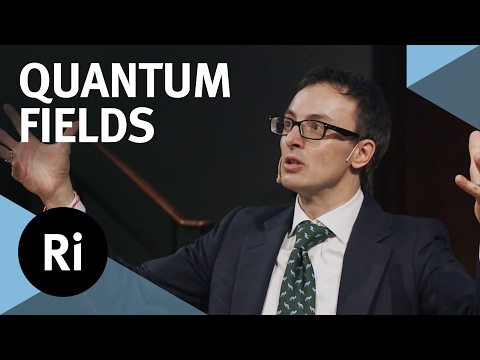
Quantum Fields: The Real Building Blocks of the Universe - with David Tong
About this video
David Tong, a Cambridge theoretical physicist, explains at the Royal Institution that the fundamental building blocks of nature are quantum fields rather than particles. He covers what we know about these fields and how they fit into the Standard Model.
Why it appears in the archive
Called a favorite and a masterpiece by commenters as the clearest accessible explanation that there are only waves in fields, and what physics still doesn't know.
AI-generated summary and labels from the source dataset; verify important details against the video. Source & credits.
From the Hacker News discussion
I would love to hear any critical take on David Tong's excellent video here: [VIDEO] "Quantum Fields: The Real Building Blocks of the Universe" I'm interested to talk to others who want to think about QFT past the maths. I had my own stab at making sense of related ontological implications here: [LINK]
Read original comment ↗When I see "explanation of the Standard Model", my mind immediately goes to my favorite YT video, which is Dr Tong's talk at the Royal Institution. I started watching this video and it took me a second to recognize the voice, it's him as well! If you want a long version: [VIDEO]
Read original comment ↗His quantum mechanics lecture on YouTube at the Royal Society I think, is a masterpiece. Some very interesting facts, mostly about what we don't know. [VIDEO]
Read original comment ↗Honestly I feel as though that's one of the most incredible aspects of theoretical physics I've seen. The fact that often times these underlying physics are danced around and even though they're unknown, we can tell something is not quite right. I believe this guy even talks about it a bit in this video made by the Royal Institution (which I really enjoy watching), discussing the possibility of different fundamental building blocks of nature. [VIDEO]
Read original comment ↗Agreed - mathematics is predicated on the idea that there are individual things, but as we are learning, through things like quantum field theory, there are no individual things, hence, no individuated 'things' to count. As such, mathematics is not the 'language of nature'. Check out David Tang's lecture on QFT: "there are no particles, only waves" [VIDEO] Mathematics still works (at our scale); the consequence is precision. Individuation of anything is a construct - including subjects and objects: [LINK]
Read original comment ↗All of this makes more sense when understood in terms of Field theory: David Tong: Quantum Fields [VIDEO] "All the electrons that are in your body are not fundamental. All the electrons that exist in your body are waves of the same underlying field." The next question is, if there are no individual things, what does math count? [LINK]
Read original comment ↗The cosmological background radiation, which is an image of the universe shortly after the big bang and before inflation, looks similar to the current layout of matter across the universe. This would seem consistent with a universe being able to be extrapolated from a region of it if there's some underlying holographic relationships. Based on this clip from David Tong. Starts here and goes on a few minutes: [VIDEO]
Read original comment ↗I think this is correct. My sense is that the assumption of _individuation_ is at the core of logic, which then infects all rational thinking. (We add the predicates to "things", and then forget that we added them!) If there are no individual things, as quantum field theory seems to suggest, what are numbers counting? [VIDEO] [LINK]
Read original comment ↗