 HackerTube.runGood videos, with context.
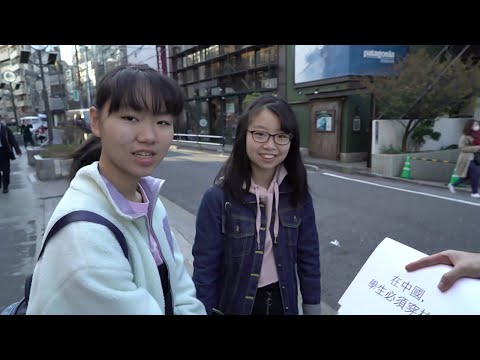
Can Japanese People Read Chinese? (Kanji)
About this video
Yuta, a Japanese YouTuber, explains whether Japanese speakers can read Chinese text. He shows how shared kanji let people guess meanings while the two languages remain completely different.
Why it appears in the archive
Cited in threads on writing systems and CJK characters as an entertaining test of how much Japanese people can understand of Chinese.
AI-generated summary and labels from the source dataset; verify important details against the video. Source & credits.
From the Hacker News discussion
>there's a bunch of stuff that kind of looks like it would make sense when reading a Chinese word in Japanese, but turns out there's a lot of meanings are very different As someone who knows nothing of the Japanese language beyond the very basics, I found these videos quite entertaining: [VIDEO] [LINK] It looks like many characters are familiar to his respondents, but their combinations make absolutely no sense.
Read original comment ↗You are not the first one who has asked that question. In case you can't watch videos right now, the short answer is "you can guess, but don't expect it to be exactly correct". [VIDEO] [LINK]
Read original comment ↗That one's more fun because it's a little more challenging for the Japanese folk, but the original is a bit more fair since it's vs traditional Chinese characters (and spoken Cantonese is a bit closer to the version that was imported by Japan): [VIDEO]
Read original comment ↗I've thought about this a little bit and wonder if the result CJK readers have ended up with is the result of a few interesting historic quirks. Assuming that homophones are simply going to exist in the languages, there's probably other alternatives. For example, in the case of modern Korean readers, the Hanja can supposedly used to help clarify the meaning of a homophone where context doesn't provide clarity. But in practice, most Korean readers don't use Hanja enough to remember more than a small percentage of what they learn in school, so they work in effect as an index into a lookup table, where they look the Hanja up in a dictionary, find the definition written in Hangul, and use that to determine the meaning. Support Japanese was reformed to entirely use one or both Kana in the way that modern Koreans use mostly Hangul. Then Kanji would be used to help determine meaning in the same way. As most people wouldn't encounter Kanji with enough frequency and distribution to remember the bulk of them, only the most common would be remembered. These are unlikely to be the difficult to discern homophones as contextual clues would clarify. So the Kanji would again also end up as indexes for looking up standardized definitions. In modern Japanese, this doesn't happen because Kanji is still used with enough frequency and variety that most people sustain some level of memory about the system. The question is how well do they remember it? [1][2][3][4][5] 1 - [LINK] 2 - [LINK] 3 - [LIN
Read original comment ↗