 HackerTube.runGood videos, with context.
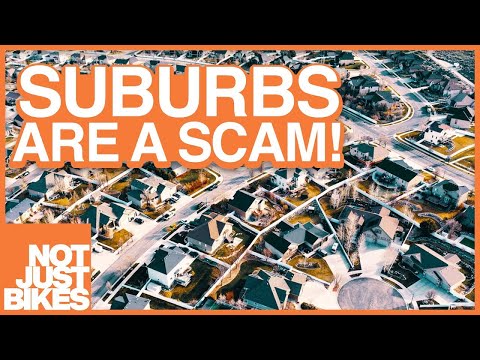
Why American Cities Are Broke - The Growth Ponzi Scheme [ST03]
About this video
Not Just Bikes explains the Strong Towns argument that car-dependent American suburbs cost more to maintain than they generate in taxes. It describes the growth Ponzi scheme that props up municipal finances.
Why it appears in the archive
HN keeps pointing to it as the clearest explanation of how low-density infrastructure is financed and why it is unsustainable.
AI-generated summary and labels from the source dataset; verify important details against the video. Source & credits.
From the Hacker News discussion
I don't think you understand how much it costs to maintain the infrastructure to your house. Not Just Bikes did an excellent series on this specific problem. [VIDEO]
Read original comment ↗> Do you have a citation for this? I don't have a citation for construction costs, and I will concede that there are many factors that may make some low density developments cheaper per unit then some higher density development. However, construction is only part of the picture. Low density development imposes terrible financial costs for cities that contain them. That's because the taxable value per square mile is much lower, but infrastructure (sewer, roads, etc) has the same per-mile maintenance and replacement costs. The infrastructure maintenance costs in many low density developments is often greater then the amount of tax revenue the development generates. For more information on the hidden costs of low density development, I can't recommend this video [1] by Not Just Bikes enough. [1] [VIDEO]
Read original comment ↗This argument is commonly thrown around, but makes no sense in practice. The denser the place, the more efficient the infrastructure use. 50 families in a single apartment building use massively fewer pipes & power lines than 50 families in single family homes. But the tax revenue for the city can still be the same. In a denser area, those families are less likely to own or need cars, and if they do, they drive less. On the other hand, low-density suburban neighborhoods are often so inefficient that the maintenance cost of their infrastructure is more than the tax revenue the residents bring in. (Here's a good overview of that: [VIDEO] ) It's more true to say that "we don't have the infrastructure for single family homes" than it is to say that we don't have the infrastructure for apartment buildings.
Read original comment ↗One comment on this is that less dense areas make it very hard to build infrastructure. For example, if there are 10 families living on a mile stretch of road, think of how much it costs to build a mile of road, along with (possibly) water and sewer there. And then the annual maintenance cost. And then the other road networks require to connect that one road, etc. Those 10 families don’t pay nearly enough in taxes to cover the cost of infrastructure maintenance. It relies on grants from state and federal governments, paid for by taxes in dense cities, to cover the expense. My point: sparse is not objectively better. I think the quality of life we have come to expect in suburbs and rural areas is not possible without the taxes gained from also having dense places. More info, and a very interesting video series here: [VIDEO]
Read original comment ↗Americans seems to abhor car/fuel/etc. taxes to the point that they vote out any politician who dares suggesting anything even approximating that, and as a result they have a huge infrastructure maintenance backlog waiting to pop. Not helped by the fact that suburban sprawl is incredibly expensive to maintain (per the tax revenue the municipality gets) compared to more densely built environments. The "Not Just Bikes" youtube channel has a series of videos on the strongtowns, uh, thingy, that goes into more details. In particular this one describes the financing of suburban infrastructure: [VIDEO]
Read original comment ↗> It would significantly expand taxes How exactly? Do you have any examples? Also, have you ever seen the price of car infrastructure? I would be willing to bet that denser walkable urban infrastructure projects are waaaaay cheaper than building and maintaining sprawling road, sewage, and power transmission networks. Sprawl is seriously draining the finances of many small cities and towns in the US. There's a whole book about it: [LINK] You could also just watch this smug video [VIDEO]
Read original comment ↗They don't charge you the full cost of providing those services. There is a whole playlist about this: [VIDEO]
Read original comment ↗I feel like this video on city growth is relevant, and was pretty interesting: [VIDEO] It suggests that a lot of the construction/repair needs of major cities could be reduced significantly, but it's a flaw inherent to their design that needs correcting first.
Read original comment ↗