 HackerTube.runGood videos, with context.
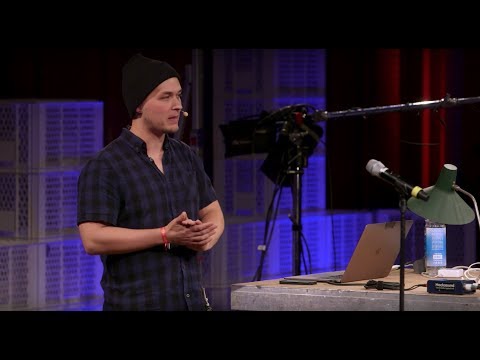
New Horizons in Music: Polyrhythms | Loop
About this video
Adam Neely's Ableton Loop 2017 talk links rhythm, pitch and synaesthesia. He shows that polyrhythms sped up become chords, so tempo and pitch are related by ratios.
Why it appears in the archive
Commenters recommend it for the mind-blowing connection between rhythm and pitch and as an approachable intro to music theory.
AI-generated summary and labels from the source dataset; verify important details against the video. Source & credits.
From the Hacker News discussion
Yeah, it even goes down to the physics of harmonics. There's this absolutely wild video by Adam nealy about how polyrhythms are actually cords. (It's very approachable if you know just a smidgeon of music theory). Highly recommend Adam's channel if you're interested in music/music theory. [VIDEO]
Read original comment ↗We're able to recognize simple ratios instantly. The fact is without number the actual digits, we know they instantly simplify into a handful of fractions. That is mind blowing. What's even more mind blowing is Adam Neely's explanation of pitch ratios and how they're related to tempo. The short incorrect explanation is if you layer beats 4:4, 5:4, 6:4 ratios (which is the ratio of pitches against the root in a major chord), then speed it up to a ridiculous frequency, our ears hear a major chord. It would seem that Tempo and Pitch are very much intertwined and our brains decipher that very quickly without evening consciously dividing the frequencies. Major chord demo: [VIDEO]
Read original comment ↗There's a great talk by Adam Neely going into some interesting relations between sound and color: [VIDEO] (timestamp where he starts talking about color, but the whole talk is interesting.)
Read original comment ↗With regard to tonality: you might enjoy some microtonal works, traditional turkish music [0], electronic music [1] and many other non-european musical traditions (indian, arab). For rhythm there's a wide range for experimentation: from really slow tempos [2] to really fast and (seemingly) chaotic [3]. I like this study from Conlon Nancarrow [4], where the tempo between two voices evolve in time in coordination with each other. So this 'different' music exists, and has existed for a long time in human history, it's just not very popular. E.G. In [1], apart from Wendy Carlos's invented microtonal scales there are some songs that take from other cultures [5] (See how the 7th track is similar to [3] interestingly enough). And it makes sense for not being popular actually, given how human ears perceive chords as really fast polyrhythms. The simpler the more harmonic they sound. [6] 0: [LINK] 1: [LINK] 2: [LINK] 3: [LINK] (1:50 onwards) 4: [LINK] 5: [LINK] 6: [VIDEO]
Read original comment ↗