 HackerTube.runGood videos, with context.
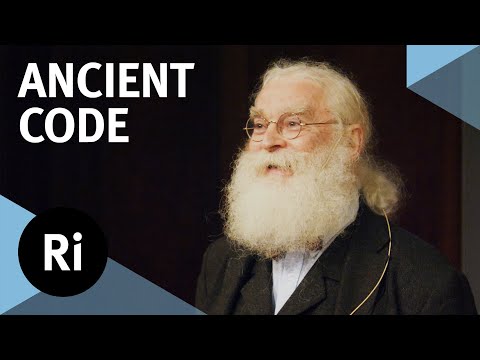
Cracking Ancient Codes: Cuneiform Writing - with Irving Finkel
About this video
Irving Finkel of the British Museum lectures at the Royal Institution on the invention and decipherment of cuneiform writing in Mesopotamia, and why it is so hard to translate.
Why it appears in the archive
HN users recommend it as a delightful, well-told account of how cuneiform developed and was decoded.
AI-generated summary and labels from the source dataset; verify important details against the video. Source & credits.
From the Hacker News discussion
Irving Finkel's lectures are marvelous. Watching his lecture on the decipherment of cuneiform is a delight, both in subject matter and in the delivery of a well worn and thoroughly polished presentation. (If only all professors were so articulate and passionate.) [VIDEO]
Read original comment ↗Cuneiform clay tablets have a survival advantage over other materials, so it's anyone's guess when the first well-defined symbolic representation of spoken language system was invented, it may have been lost to history entirely. Highly recommend Prof Irving Fink's talk to Royal Institution on the 3,000 year development of cuneiform, how it is read, and the story of its decipherment: [VIDEO]
Read original comment ↗Here[1] is a video covering how cuneiform (the writing system) was deciphered, most of it was solved after they found an inscription in three different languages. [1] [VIDEO]
Read original comment ↗They found cuneiform tablets, that's pretty fascinating. There's a really good Royal Institution talk on cuneiform and how difficult it is to translate: Cracking Ancient Codes: Cuneiform Writing - with Irving Finkel [VIDEO]
Read original comment ↗The earliest surviving written records - the clay tablets of ancient Mesopotamia - are mostly collections of data, taxation records and so on. It was something of a disappointment to scholars when cuneiform was deciphered that their materials didn't record many epic poems, but rather a whole lot of internal revenue information. It's a fascinating story, well told by Irving Finkel: [VIDEO] The vast majority of data being collection today is similarly uninteresting - maybe the surveillance state likes it as a means to control politicians by threatening to expose their porn watching habits or similar, and certainly targeted advertising has made some people wealthy, but it's not even well-curated, and it's certainly not the kind of valuable data that comes out of well-designed and controlled experiments, and thus 'big data science' is one of the most over-hyped fields in existence today.
Read original comment ↗