 HackerTube.runGood videos, with context.
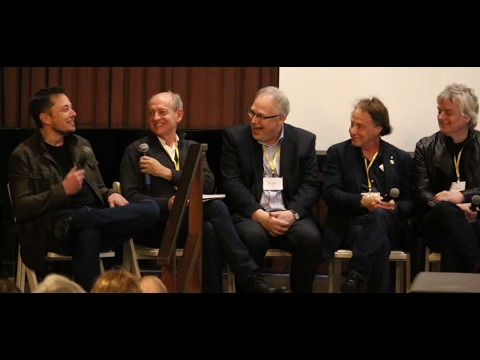
Superintelligence: Science or Fiction? | Elon Musk & Other Great Minds
About this video
A panel from the Beneficial AI 2017 conference moderated by Max Tegmark, with Elon Musk, Stuart Russell, Kurzweil, Hassabis, Harris, Bostrom, Chalmers and others. They discuss likely outcomes of human-level AGI and what outcomes are desirable.
Why it appears in the archive
HN mostly cites it for specific statements, such as Hassabis on AGI and safety buffers, rather than recommending it outright.
AI-generated summary and labels from the source dataset; verify important details against the video. Source & credits.
From the Hacker News discussion
DeepMind's mission is to build AGI. I think it's probably good if they have a buffered lead on all other efforts. That concern probably weighs on decisions about releasing code. The rationale for why a buffer would be good is described by Demis Hassabis here: [VIDEO] ...the main points are: there may be safety considerations along the way that are costly. More "capitalistic" organizations may decide to shortcut those costs because of the winner-take-all scenario. DeepMind is at least nominally very committed to safety. Releasing AlphaGo's source code would probably reduce DeepMind's buffer, which in theory, would also reduce safety.
Read original comment ↗Top people including DeepMind's CEO Demis Hassabis and Prof Stuart Russell, a AAAI and AAAS fellow who is a co-author of the AI textbook used at most of top universities, agree that AGI is definitely possible and going to happen. [1] Hassabis also stated in another session that there are probably at least half a dozen mountains to climb before reaching AGI and he would be surprised if it takes more than 20. He also said that it has been easier to develop major advances than he thought. [2] Considering that there has been about one major leap per year in neural networks architecture and systems for the past 3-4 years, and this includes training neural networks to do one-shot learning for physical robot control after practicing in a simulator, should we really be that complacent? Even if the advances slow down to one per 2 years and it takes 12 of them to get to AGI, that's only 24 years. If the rate continues to be one per year, that's only 12 years. [1] From the start of [VIDEO] [2] [LINK] Note: Reinforcement Learning is far from the only component being researched at major labs, including DeepMind and OpenAI.
Read original comment ↗Demis Hassabis. [VIDEO] , older [LINK] (NB ‘likely’ ≠ ‘>50%’, not sure what his percentage would be) I can give more but I did upstream link to a paper on this so it seems pretty pointless.
Read original comment ↗"And what would excite me about actually the birth of superintelligent AI - one of the things, apart from solving obvious problems like curing disease and energy issues and all the rest, perhaps differs a little bit with what Stuart said. I’m not so worried about idiocracy or all of us just losing our way as apes and living unproductive lives in dialogue with these oracles. I think actually, I would want a truly value-aligned superintelligence to incrementally show us, not merely conserve what we want, but show us what we should want to keep improving our values so that we can navigate in the space of all possible experiences and converge on better and better ones." - Sam Harris Source : [VIDEO]
Read original comment ↗> This is silly and ridiculously judgmental No it really is not. Just watching this panel/Q&A at the 'Future of Life Institute', with Elon Musk and others answering the question "is some form of super-intelligence possible?", creeps me out (Musk comes out the most sane): [VIDEO] > The author’s point is that by (say) 2050 we will likely see AI asking unsettlingly “intelligent” questions More unsettling than the questions of a young child? What unsettling questions could it ask according to you? I just do not see what you're getting at, at all. The question that arises when I read comments like yours is: are some humans so alienated from themselves and others that they believe machines will be able to invent and do science better than humans can? I just don't see the use cases. Really, can someone please explain to me what the point is in spending ludicrous amounts of scarce natural resources and time into this notion of creating a human-like AI, when we have so many other challenges we are facing: environmental pollution and poisoning, financialization of housing, e-waste and right-to-repair (should really be called 'right-to-poison' since companies today are basically legally allowed to pollute [1]), and privatized science and technology (Sci-Hub)? If we do want to build a human-like AI, shouldn't we first try to create a system where all humans have equal and free access to the sum total of all inherited knowledge? There is so much gatekeeping going on today, and I would lik
Read original comment ↗