 HackerTube.runGood videos, with context.
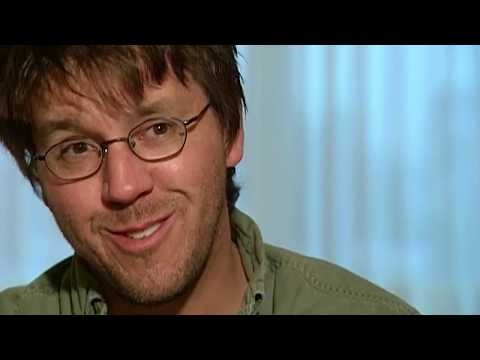
David Foster Wallace unedited interview (2003)
About this video
The full unedited 2003 ZDF television interview with David Foster Wallace, running about an hour and a half. He talks about literature, boredom, silence, television and what stories do.
Why it appears in the archive
Used as a source for Wallace quotes on fiction, silence, self and technology rather than recommended outright.
AI-generated summary and labels from the source dataset; verify important details against the video. Source & credits.
From the Hacker News discussion
He’s telling a story describing our situation that is hard to directly talk about. David Foster Wallace once said in an interview [1]: > Let me insert one thing, which I'll bet you've noticed from talking to writers—is that most of the stuff that we think we're writing about in books is very difficult to talk about straight out. You know, question and answer. In some sense, it probably can't be talked about directly, and that's why people make up stories about it. [1]: [VIDEO]
Read original comment ↗At least the official version that is currently in Debian sid/unstable is having problems downloading vtt: apt-cache policy youtube-dl youtube-dl: Installed: 2021.01.08-1 Candidate: 2021.02.04.1-1 Combining youtube-dl with vtt2txt.py[1] would usually give me a transcript, however this no longer works for me (for now): $> youtube-dl --skip-download --convert-subs vtt [VIDEO] $> find . -name "*.vtt" -exec python vtt2text.py {} \; [1] [LINK]
Read original comment ↗Cue DFW's rant on silence and Pulp Fiction's uncomfortable silence scene [1, 2]. The author mentions Japan but doesn't mention aizuchi, a constant backchanneling that signals attentiveness that I'd classify as the opposite of silent pontificating [3]. [1] [VIDEO] [2] [LINK] [3] [LINK]
Read original comment ↗One day I want to expand on the idea that our digital avatars, our images and representations of ourselves, become an extension of our own self-concept, in the same way our keyboard becomes an extension of our hands and our body. Our social media profiles, our timelines, photos, and digital content, become part of our selves, and we begin to identify with these time capsules we've created of ourselves, to the point where we _are_ the person in the photo, we _are_ that person on Facebook. It's a fundamentally backwards-facing view of the self that relies on historical or past depictions of an individual in order to define their current self-concept. It implies an immutability, a static, unchanging quality to the person, since after all - there "you" are, or at least all your photos and your memorabilia, your self-depictions and simulacra, committed to and preserved in the permanent record of the cloud. It's also one that emphasizes the importance of external markers and signals of identity - only those that can be extraverted - to the detriment of the inner life of the psyche, the private life of the mind which is not so readily available for examination or expression. This way of looking of ourselves through a digital black mirror continues to uphold the illusion of permanence; our self is like a river, and we never step in the same one twice - unless we freeze the river (in time) and post it to Instagram. Not to mention all the vanity and superficiality of Photoshop, filters
Read original comment ↗