 HackerTube.runGood videos, with context.
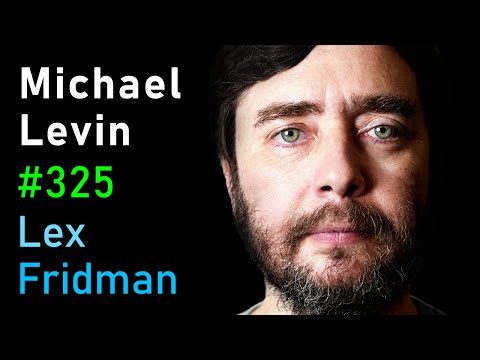
Michael Levin: Biology, Life, Aliens, Evolution, Embryogenesis & Xenobots | Lex Fridman Podcast #325
About this video
Lex Fridman talks with Tufts biologist Michael Levin about bioelectricity, embryogenesis, xenobots and how cells collectively pursue goals. They range into cognition, evolution and the possibility of aliens.
Why it appears in the archive
HN links it as a long-form entry point to Levin's ideas on cancer, bioelectric signaling and intelligence beyond the brain, though one commenter finds some claims outlandish.
AI-generated summary and labels from the source dataset; verify important details against the video. Source & credits.
From the Hacker News discussion
I loved Michael Levin's thoughts on solving cancer. Kind of similar to immunotherapy but on a level of reprogramming the cells back that got 'lost' from their big purpose in their organ. [VIDEO]
Read original comment ↗Michael Levin recently appeared on the Lex Fridman podcast*, and here he goes over much of the same amazing material, but along with a visual presentation. * Michael Levin: Biology, Life, Aliens, Evolution, Embryogenesis & Xenobots | Lex Fridman [VIDEO]
Read original comment ↗Related, lately I have been enthralled with the work of Michael Levin at Tufts. He studies things like goal directed behavior of cells and systems of cells. Here is an intro to his work: [VIDEO]
Read original comment ↗That's one of my long time interests and hobbies, which I write about on HN and discuss with other people frequently. I'm supposed to be doing something else right now so I'll quickly drop a few disorganized quotes and links here. (Sorry I didn't have time to be more concise!) A few years ago I ran across Max Bittker's beautiful "Sandspiel", which is a delightful cellular automata toy that simulates sand and other rules: [LINK] A few days ago I saw him tweet some amazing stuff that resonated with me, which then led me to discover what he's been working with Lu Wilson (TodePond): Sandspiel Studio -- user definable rules using a block based visual programming language. [LINK] "working on goth fungus kidpix": [LINK] Lu Wilson (TodePond): [LINK] Sandspiel Studio: [LINK] Sandspiel introduction: [LINK] Sandspiel Studio in 60 seconds: [LINK] Rainbow Sand: [LINK] Huegene: [LINK] Flower: [LINK] TodePond's Spellular Automata: [LINK] We had a great discussion on the Sandspiel Studio Discord server, where I posted some interesting links: Check out the Long Now Foundation talk by Brian Eno and Will Wright about Generative Systems: 10:39 minute excerpt of Will talking about cellular automata and demonstrating with Mirak's Cellebration: [LINK] 6:48 minute excerpt of Will demonstrating Spore Metaverses: [LINK] 6:29 minute excerpt of Will demonstrating Spore Creature Demo: [LINK] Entire 1:38:50 hour Long Now Foundation talk: Playing with Time | Brian Eno and Will Wright [LINK] Craig Reynolds
Read original comment ↗I am a huge fan of Sandspiel, which Max described in this article from 2019, and recently I was delighted to discover that he and TodePond have been doing a huge amount of wonderful work since then. What happens when you combine Sandspiel with a Scratch-like blocks based visual programming language that lets you look inside and see how rules work, tweak and modify them, and even define your own rules for different types of particles? And then form a community around it for sharing Here is Max's and TodePond's brilliantly ambitious visually programmable sequel, Sandspiel Studio! [LINK] Here's my profile, where you can play with the version of Max's flower growing rule that he shows here: [LINK] ...to grow underground potatoes and fancy flowers: [LINK] I've written more about Sandspeil Studio and related topics of artificial life, cellular automata, and visual programming, and quoted some interesting discussion with Max and TodePond from their Discord server (they actually already knew about most of this stuff, but they love it as much as I do), in the "Ask HN: What weird technical scene are you fond/part of?" discussion, in reply to api's comment about Digital Artificial Life: [LINK] api 67 days ago | parent | context | favorite | on: Ask HN: What weird technical scene are you fond/pa... Digital Artificial Life -- as in evolving program ecosystems, artificial chemistries or cellular automata that can manifest life-like phenomena, etc. Haven't done much with it in a while but w
Read original comment ↗Michael Levin has been doing research activating certain types of cell growth based on certain field frequencies. I wonder if this ties together. [VIDEO] I wonder if neurons are actually the hard drive and ephaptic fields are the software or network the software runs on.
Read original comment ↗The article and the comments remind me of Michael Levin's work on bioelectricity. 20 min ted talk - [LINK] 3 hr lex fridman episode - [VIDEO]
Read original comment ↗Michael Levin’s research fundamentally challenges the traditional biological view that intelligence is exclusive to the brain, proposing instead that "mind" and agency are distributed throughout all levels of biological organization. By studying how cellular collectives communicate via bioelectric networks, Levin demonstrates that cells cooperate toward a specific "target morphology," or anatomical goal, independent of a fixed genetic blueprint. This is most vividly illustrated by the creation of Xenobots—synthetic lifeforms made from frog skin cells that spontaneously reorganize into new organisms with novel behaviors, such as kinematic self-replication. This "scale-free cognition" suggests that evolution provides a versatile toolkit rather than a rigid instruction manual, allowing biological systems to solve problems and adapt their forms in ways that transcend their natural evolutionary history. The implications of this work extend into a "new frontier" of regenerative medicine and philosophy, shifting focus from genomic editing to cracking the bioelectric code that governs complex growth. Levin envisions a future where we can "reprogram" cellular collectives to trigger organ repair, limb regeneration, or the reversal of birth defects by communicating with the system’s inherent intelligence. As the boundaries between biological, synthetic, and mechanical life continue to blur through the creation of hybrids and cyborgs, his research forces a re-evaluation of what it means
Read original comment ↗