 HackerTube.runGood videos, with context.
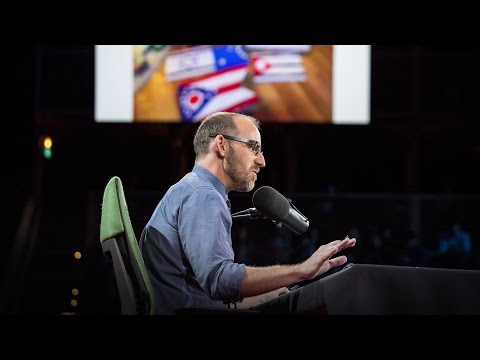
Why city flags may be the worst-designed thing you've never noticed | Roman Mars
About this video
Roman Mars gives a funny TED talk on vexillology, laying out five basic principles of good flag design and why many city flags fail them.
Why it appears in the archive
The canonical reference on flag and logo design principles, cited in branding and design threads.
AI-generated summary and labels from the source dataset; verify important details against the video. Source & credits.
From the Hacker News discussion
This is painful to see. It looks like a shopping mall or apartment building logo, compared to other states with proper flags. And it goes without saying, on this topic, one must watch the short talk on state and country flags: [VIDEO]
Read original comment ↗> kids in first year of school should know how to draw flag from memory Roman Mars taught me that – well Ted Kaye, but Roman taught me in his seminal TED talk [1]. [1] [VIDEO]
Read original comment ↗Their flag is terrible: [LINK] 99% Invisible does a great episode on what makes a good flag, and why cities like Chicago, DC and Amsterdam have iconic, memorable flags: [VIDEO] [LINK]
Read original comment ↗Rebranding, when done correctly, can be a great way to regroup and focus on what's important about your business. You really need to stop looking at it as just a new design, and look at what philosophy it exudes. This constant visual reminder of what the company's mission is resonates downward much better than a mission statement, and how clients/customers interact with you. This is of course if your rebrand was a success, and that's a very very difficult task dependent on all sorts of internal factors, that even the largest companies get wrong (see Gap, Uber, Pepsi). Don't listen to me though: [LINK] [VIDEO]
Read original comment ↗American flag design continues to amaze with its ugliness. I’ve read [LINK] and watched [VIDEO] years ago, and would think that’s “flag design 101”, but it doesn’t look like few designers know that in the USA.
Read original comment ↗This is an extremely difficult question that I've been grappling with myself. My first strategy is to create writings that can't be summarized. I try to make essays that are dripping with idiosyncrasy. I can't win in an information war, but I can stay competitive for ~10 years in a creative clash: [1] [LINK] [2] [LINK] [3] [LINK] [4] [LINK] [5] [LINK] I myself draw lots of my inspiration from my "sages of style", in the same way that AIs will try to replicate my voice. None of these great thinkers can be summarized or replicated in any meaningful way: [6] David Foster Wallace: [LINK] [7] George Carlin: [LINK] [8] Derek Sivers: [LINK] [9] John Green: [LINK] [10] Roman Mars: [VIDEO] [11] Alan Kay: [LINK] [12] Alan Watts: [LINK] [13] Richard Feynman: [LINK] [14] Raymond Smullyan: [LINK] But style only takes you so far. My second strategy is to socialize IRL. This year, I'm starting a tech conference called "Outland" to foster community in an age where community might be all that matters. [15] [LINK]
Read original comment ↗