 HackerTube.runGood videos, with context.
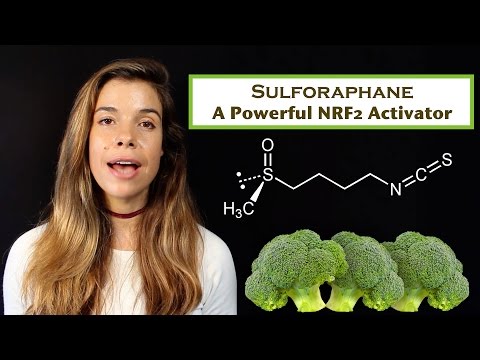
Sulforaphane and Its Effects on Cancer, Mortality, Aging, Brain and Behavior, Heart Disease & More
About this video
Rhonda Patrick of FoundMyFitness makes a case for isothiocyanates such as sulforaphane from cruciferous vegetables and broccoli sprouts. It covers cancer, aging, heart disease, brain and behavior, and neurodegeneration, with chapter timestamps.
Why it appears in the archive
HN recommends it as a science-backed overview of sulforaphane's health effects, particularly for cancer.
AI-generated summary and labels from the source dataset; verify important details against the video. Source & credits.
From the Hacker News discussion
There's two FoundMyFitness podcasts that positively impacted my life. I've been telling everyone I know to try a broccoli sprout smoothie because of the outstanding effect it's been having on my health. I suspect a fair number of HN readers might also benefit from giving it a try. Since this is still an active research topic I think it prudent to remind readers to take all health or medical claims with a grain of salt. My first smoothie caused a physiological reaction and it lit up something in my brain. A while after drinking it I messaged a few friends to tell them that I value our friendship. It appears to make you less autistic, or something along those lines. There appear to be additional positive effects, although I hesitate to describe them because they even sounds like bullshit to my own ears. "Sulforaphane and Its Effects on Cancer, Mortality, Aging, Brain and Behavior, Heart Disease & More" [0]: > Isothiocyanates are some of the most important plant compounds you can get in your diet. In this video I make the most comprehensive case for them that has ever been made. Short attention span? Skip to your favorite topic by clicking one of the time points below. Full timeline below the fold... "Jed Fahey, Sc.D. on Isothiocyanates, the Nrf2 Pathway, Moringa & Sulforaphane Supplementation" [1]: > Dr. Jed W. Fahey is a nutritional biochemist with broad training and extensive background in plant physiology, human nutrition, phytochemistry and nutritional biochemistry. He is t
Read original comment ↗Here is a science-backed video talking about the benefits of a substance found in broccoli sprouts w.r.t. cancer. [VIDEO]
Read original comment ↗Sorry to hear your are going through this. Here are a few I have found interesting. I am not a doctor and by no means is any of this something I am suggesting. It's just interesting content on your topic. - Prof. Thomas Seyfried - 'Cancer as a Metabolic Disease: Implications for Novel Therapies' [LINK] - A New Cancer Strategy [LINK] - The MOST Important Cancer Prevention [LINK] - Antiangiogenic Therapy [LINK] - Sulforaphane and Its Effects on Cancer, Mortality, Aging, Brain and Behavior, Heart Disease & More [VIDEO] - Q&A with Dr. Jed Fahey on Sulforaphane, Moringa and Chemoprotection [An authoritative discussion!] [LINK] - [LINK] Also watch this site if your doctors run out of ideas. Look for newer and more targeted methods. [LINK] Some people that were written off by doctors had some success with prolonged fasting. Also important would be to get opinions by many doctors inside and outside of your medial group.
Read original comment ↗A few quick ideas from my experiments are below. I'm not a doctor so these aren't recommendations -- just things that I've experimented with. It requires a change in perspective. A quote I like is, "food is not a recreational drug." Food is fuel for a fermentation tank (digestive system). If you want the machine to run well, figure out what creates ideal fermentation environment. (Watch out for things like sugars and flours.) I do meal prep by steaming a lot of vegetables in advance[1] and storing them in containers in the refrigerator. Then I can quickly make a variety of meals by combining the vegetables in various ways. Legume (bean, lentil, split pea) and vegetable soups are also good to have on hand at all times. Tahini is a base for a good sauce. I think 2 tbsp will provide about 10% of daily required calcium for most people. When out of the house, I bring along some chunks of raw red cabbage and raw broccoli.[2] They are cheap, filling, and actually pretty good, especially when you're hungry. I think it's okay to skip meals when healthy food isn't available. Restaurants can also usually provide steamed, plain vegetables on request, if you're eating out with people. Drink a quart of cold water before starting breakfast and sufficient water throughout the day. If you need to reduce calories, you can make a cutoff time for eating -- like 4, 5, or 6 pm. That also provides 14-16+ hours of fasting per day to rest the digestive system. Another way to do it is to have reduced
Read original comment ↗There's 2 ways to look at protein. There's a life-span way and a health-span way. Do you want to live longer? or do you want to feel and potentially look better? When it comes to protein, these two things seem to be at odds with one another. High protein is correlated with shorter lifespans. - [LINK] - [LINK] You'll notice the first link shows higher lifespan when protein intake is increased after a certain age (65). it's assumed this is largely due to the number of deaths from injuries (falls) and complications from injuries that happen to the elderly and that muscle mass at this stage is vital. But protein tends to active mTor. You want that to not be activated and you want IGF-1 to be low. These are correlated with longer lifespan. - [LINK] - [LINK] - [LINK] - [LINK] And it looks like studies in humans and animal models seem to reflect correlative data for "Blue Zone diets" (more or less). ( [LINK] ). Most of the regions in the Blue Zones are high in veggies, low in meat, often with a bit of seafood, and virtually zero processed foods. How you define a little meat really varies when going by "blue zones". Some might say 4-6oz a day, some might say 1-2x a week. The low amounts of meat and obtaining incomplete proteins with more narrow amino acid profiles is beneficial for health in the long term, largely due to mTor activation being avoided or reduced. The body evolved (it seems) to an extent, to struggle for certain nutrients (but that doesn't mean do without them entirely
Read original comment ↗