 HackerTube.runGood videos, with context.
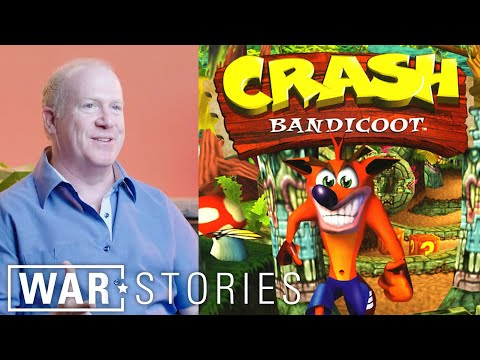
How Crash Bandicoot Hacked The Original Playstation | War Stories | Ars Technica
About this video
In Ars Technica's War Stories, Naughty Dog co-founder Andy Gavin explains how the team squeezed Crash Bandicoot onto the original PlayStation. They overwrote Sony library code in RAM, built custom animation compression, and streamed assets around slow seek times.
Why it appears in the archive
It is one of the most frequently recommended videos on HN for old-school game development hacks under tight hardware constraints.
AI-generated summary and labels from the source dataset; verify important details against the video. Source & credits.
From the Hacker News discussion
I'm loving this series from ARS, another great one about Crash Bandicoot where apparently they needed extra RAM so selectively overwrote the sony libraries in RAM with their own data, by experimenting which areas were needed on whether it crashed or not. [VIDEO]
Read original comment ↗This is part of a great series of interviews with the developers of some of the most influential games in history. Two of my favorites are Andy Gavin on Crash Bandicoot: [VIDEO] and Sid Meier on Civilization: [LINK]
Read original comment ↗For anyone interested how it was developing for the original PSX (and therefore under hardware constraints) How Crash Bandicoot Hacked The Original Playstation [VIDEO] Immensely interesting video! "Old" hardware makes me feel so humble regarding what we have now. Hardware limitations back then really pushed developers towards novel approaches and solutions.
Read original comment ↗For anyone that hasn't yet seen it, I'd highly recommend watching Ars Technica's video interview on Amnesia and how it created its unique atmosphere: [LINK] Along with the rest of their War Stories videos, for that matter. The interview with Andy Gavin on Crash Bandicoot is great, even though I never played the game: [VIDEO]
Read original comment ↗In the cause of Naughty Dog, it was Andy Gavin who introduced Lisp and GOAL and was one of the co-founders of Naughty Dog. He came from MIT and was a student of Rodney Brooks. [LINK] [LINK] If someone hasn't seen it, his episode on Ars Technica's War Stories was awesome. He seems to be a hacker's hacker. It's a fascinating story because it's not really how I personally work (internally), so it's fun hearing someone describe just diving in like that. [VIDEO] [LINK] It was my understanding that Racket wasn't in use anymore at Naughty Dog. It would be cool if there was an update or someone who knows (I know Dan is no longer at Naughty Dog), because unfortunately the tale of Lisps in companies is normally that it eventually gets replaced or set aside (where new stuff is built in something else).
Read original comment ↗I really do miss this old regime of utilizing the entire machine in games. There is a fantastic video of one of the original Naughty Dog developers talking about the optimizations they did for the original Crash Bandicoot ( [VIDEO] ), and some of the less conventional tricks they did to enable 3D gameplay on the PS1. I've always wondered what the true limit of performance optimizations is in games. Obviously modern systems have a lot more systems to compete and share memory between, but there have been obvious cases where performance has had low priority. Also under consideration is the constantly morphing landscape of PC hardware and software architecture. Given a fixed hardware, like the PS5 or Xbox, with the hardware of a high end gaming computer, what is the true limit a game could reach.
Read original comment ↗If you haven't already seen it, I highly recommend watching the "War Stories" video on the making of Prince of Persia: [LINK] On a related note, I also highly recommend the "War Stories" video for the making of Crash Bandicoot: [VIDEO]
Read original comment ↗Andy Gavin has a great interview on the technical-side of developing Crash Bandicoot [0], which they wrote in GOOL, the precursor to GOAL. In fact, they wrote GOOL explicitly for Crash Bandicoot. Later, when writing Jak & Daxter, Naughty Dog developed GOAL. Sony ended up buying ND -- among other things, they were hoping to use ND's code, and were quite surprised to discover that it was all written in a homebrewed Lisp dialect. You can see some GOAL here: [LINK] [0] [VIDEO]
Read original comment ↗